How a Sports Consultant Can Help You Launch a New Athletic Program from Scratch
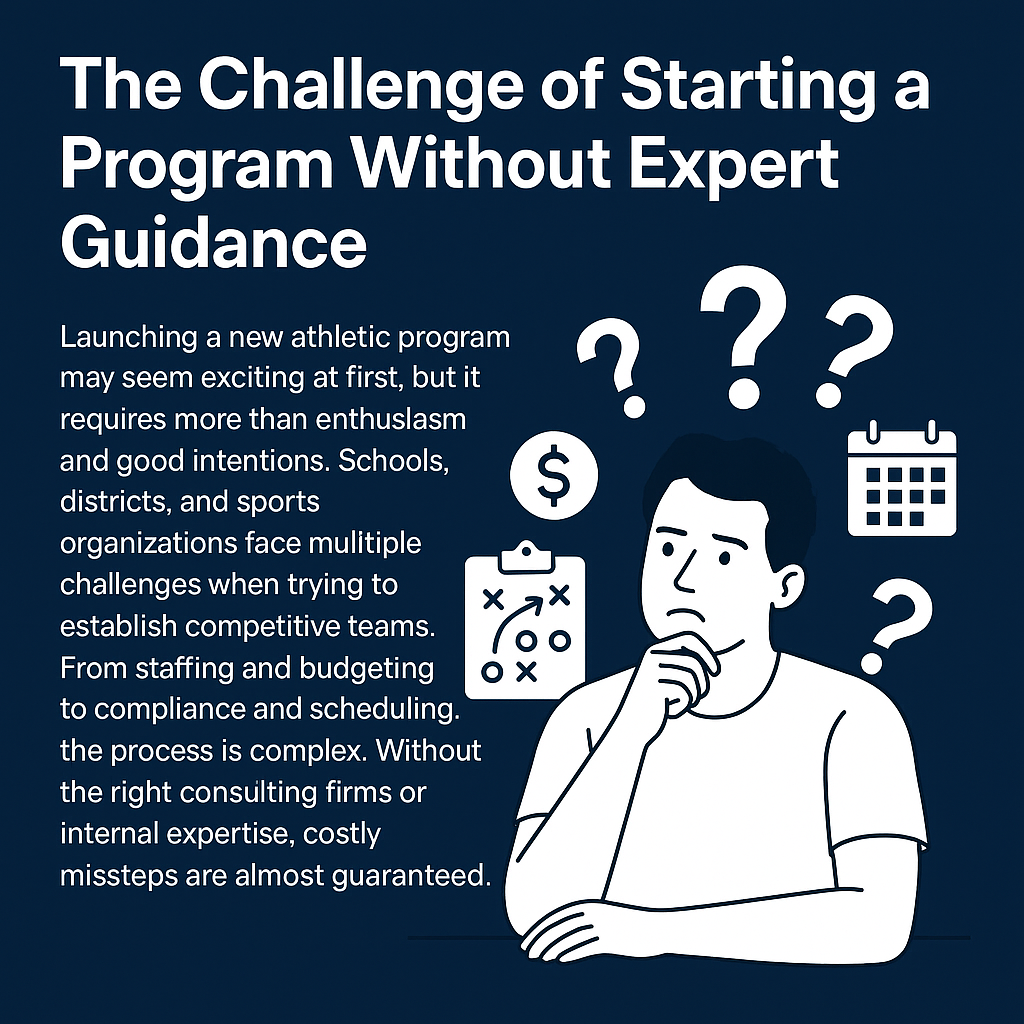
Launching a new athletic program is not simply a matter of hiring a coach, ordering uniforms, and putting games on the calendar.
Before the first practice takes place, leadership may need to make decisions about program scope, budgeting, facilities, staffing, compliance, scheduling, equipment, student-athlete support, risk, and long-term operations. Each decision affects what comes next.
For a school, college, district, or organization building a program from scratch, those decisions can become difficult when there is no existing athletic infrastructure to follow.
A sports consultant can help leadership turn the idea of a new athletic program into a structured launch plan. Instead of treating each issue as a separate project, the consultant helps decision-makers understand how the pieces fit together and what needs to happen before the program becomes operational.
Why New Athletic Programs Need More Than a Good Idea
A new program often begins with an opportunity.
There may be strong student interest in a sport. Enrollment may be growing. Leadership may want to expand extracurricular opportunities, enter a new competitive market, strengthen campus engagement, or build an entirely new athletics department.
But enthusiasm does not answer the operational questions.
Leadership still needs to determine:
- Which sports should launch first?
- What will the program actually cost?
- Are current facilities adequate?
- Which positions need to be hired?
- What equipment must be purchased?
- Which governing or association requirements apply?
- How will scheduling and travel work?
- What policies must exist before participation begins?
- What does a realistic launch timeline look like?
- How will the organization know whether the program is sustainable?
These decisions are interconnected. Adding a sport may require additional facilities. Facility limitations may affect scheduling. Scheduling may affect staffing and transportation. Participation projections affect equipment, coaching, and operating budgets.
A sports consultant helps leadership evaluate those dependencies before commitments are made.
Start With Athletic Program Feasibility
Before asking, “How do we launch?” leadership should determine, “What should we actually launch?”
A feasibility assessment can help determine whether the proposed athletic program fits the organization's resources, objectives, student population, facilities, and competitive environment.
That assessment may examine factors such as anticipated participation, available competition, facility capacity, staffing requirements, equipment needs, transportation demands, operating expenses, and administrative capacity.
This is especially important when an institution is considering several sports at once.
Leadership may discover that launching three teams simultaneously would place too much pressure on facilities and staff, while a phased launch would create a more manageable path.
The objective is not simply to determine whether athletics can be added. It is to establish a program model the institution can realistically operate.
Build a Realistic Startup and Operating Budget
One of the biggest risks in launching a new athletic program is underestimating its true cost.
The initial budget may include obvious expenses such as uniforms and equipment, but those expenses represent only part of the financial picture.
Depending on the program, leadership may also need to account for:
- Coaching and administrative compensation
- Facility construction, renovation, or rental
- Competition and officials
- Transportation and lodging
- Athletic training and medical support
- Insurance and risk-management requirements
- Technology and registration systems
- Recruiting or participation-development expenses
- Marketing and communications
- Maintenance and replacement of equipment
- Conference, association, or membership expenses
A sports consultant can help leadership distinguish between startup costs and recurring operating costs.
That distinction matters.
An organization may have enough funding to launch a program but lack the recurring resources necessary to operate it successfully several years later.
A stronger launch plan considers both.
Determine Which Sports Should Launch First
Not every sport needs to begin at the same time.
When organizations are creating an athletics department or expanding from a small number of teams, the sequence of the launch can have a major impact on cost and operational complexity.
A sports consultant can help leadership evaluate potential sports based on factors such as student interest, facility availability, competitive opportunities, staffing availability, operating costs, participation projections, and applicable equity requirements.
The goal is to develop a launch sequence that makes operational sense.
Instead of choosing sports solely because they are popular, leadership can evaluate which combination creates the strongest foundation for the overall athletic program.
Establish the Governance Structure Before Hiring
A new athletic program needs clear leadership.
Before coaches arrive, the organization should understand who has authority over athletics and how important decisions will be made.
Questions may include:
Who supervises the athletic director?
Who approves schedules?
Who controls athletic spending?
Who handles eligibility or compliance questions?
Who manages incidents involving student-athletes or coaches?
Who approves travel?
Who communicates with parents, administrators, governing bodies, or institutional leadership?
Without clear decision rights, routine issues can quickly become leadership problems.
A sports consultant can help establish an operating structure that defines responsibilities, reporting relationships, approval processes, and escalation pathways before the program becomes busy.
Create the Right Staffing Model
Hiring a head coach is only one part of building an athletic operation.
Depending on the size and level of the program, leadership may need coaches, athletic administrators, athletic trainers, operations personnel, event staff, academic support, compliance support, communications personnel, or other specialized roles.
The staffing model should match the actual needs of the program.
Launching with too little support can overwhelm a small team. Building too much administrative infrastructure too early can create unnecessary expense.
A consultant can help determine which positions are necessary for launch, which responsibilities can initially be combined, and which roles may need to be added as participation grows.
Evaluate Facilities Before the Launch Date Is Announced
Facilities can determine whether an athletic-program concept is realistic.
A school may have significant student interest in a sport but lack adequate practice space. A college may have competition facilities but insufficient locker rooms, storage, offices, athletic training space, or spectator infrastructure.
These issues should be identified early.
Facility planning can include reviewing:
- Practice and competition space
- Locker rooms
- Equipment storage
- Athletic training areas
- Strength and conditioning space
- Accessibility
- Safety considerations
- Spectator capacity
- Parking
- Lighting
- Technology
- Maintenance requirements
If renovations or construction are necessary, those projects can become critical dependencies within the launch timeline.
Understanding them early helps prevent leadership from announcing a season that the institution is not operationally prepared to support.
Address Compliance and Risk Before Athletes Participate
Compliance should be designed into the program rather than added after problems appear.
The exact requirements will depend on the institution, competitive level, governing structure, location, and sports being offered.
Leadership may need to evaluate eligibility requirements, participation policies, health and safety procedures, insurance, background screening, reporting responsibilities, athlete conduct, travel protocols, emergency procedures, and applicable equity obligations.
A sports consultant can help leadership identify which compliance and operational questions require attention and coordinate those issues with the appropriate institutional or qualified professional resources.
The goal is to make compliance part of the launch architecture.
Develop the Operational Systems Behind Game Day
Athletics creates recurring administrative work.
Someone must manage registrations, rosters, schedules, transportation, officials, facilities, communications, equipment, travel, medical documentation, event operations, and countless other details.
If those processes are not established before launch, coaches and administrators can spend the first season inventing procedures while trying to operate the program.
That increases the likelihood of inconsistent decisions and avoidable mistakes.
A launch-focused sports consulting engagement can help define core workflows before the first competition takes place.
Build a Launch Timeline With Clear Decision Points
A successful athletic-program launch needs more than a target season.
It needs a sequence.
For example, leadership may need to complete feasibility and budgeting before approving sports. Sports selection may need to occur before staffing. Staffing may need to occur before scheduling and athlete recruitment. Facility improvements may need to be completed before practices begin.
A structured launch roadmap identifies those dependencies.
Instead of a vague goal such as “start competition next fall,” leadership receives a clearer view of what must happen and when.
Milestones might include:
Program concept → feasibility → leadership approval → budget → facilities → staffing → compliance → scheduling → athlete onboarding → operational readiness → launch
That sequence gives leadership a way to monitor readiness and identify delays before they threaten the opening season.
Plan for Student-Athlete Recruitment and Participation
A program cannot succeed without participants.
Organizations should understand where prospective student-athletes will come from, how interest will be measured, what participation expectations will look like, and how athletes will be introduced to the new program.
For schools expanding existing athletics, that may involve campus interest assessments and communication.
For colleges or organizations creating programs with a recruiting component, the process may be considerably more complex.
Either way, participation planning should be connected to budgeting, staffing, facilities, scheduling, and program expectations.
Prepare Coaches to Operate Within the New System
Even experienced coaches can struggle when joining a brand-new program because there is no established institutional routine.
They need more than technical knowledge of their sport.
Coaches should understand the organization's expectations around communication, scheduling, purchasing, travel, student-athlete conduct, safety, documentation, reporting, and escalation.
Establishing these expectations during onboarding helps create consistency across teams from the beginning.
Create a Launch-Day Readiness Review
Before practices or competition begin, leadership should know whether the program is actually ready.
A final readiness review can evaluate whether major launch requirements have been completed.
That may include confirming staffing, schedules, facilities, equipment, transportation, policies, emergency procedures, athlete documentation, communications, and other operational dependencies.
The purpose is to identify unresolved issues while leadership still has time to address them.
Launching should be the result of demonstrated readiness, not simply the arrival of a date on the calendar.
Build the Program for Year Two, Not Just Day One
A common mistake is focusing entirely on opening day.
A sustainable athletic program needs to function after the excitement of the initial launch fades.
Leadership should consider how the program will evaluate participation, staffing capacity, expenses, facility utilization, operational problems, student-athlete experience, and other indicators after the first season.
Those findings can inform decisions about whether to expand, adjust, or delay additional sports.
A sports consultant can help establish a multi-year roadmap so the organization is not rebuilding its strategy every season.
When Should an Organization Hire a Sports Consultant?
Sports consulting may be especially valuable when an organization is:
- Creating an athletic department for the first time
- Adding athletics to a school or educational organization
- Launching several new sports
- Moving from recreational participation toward structured competition
- Expanding from JV to varsity competition
- Entering a new conference or competitive structure
- Facing major facility or staffing decisions
- Building a program without experienced internal athletic leadership
- Trying to establish a realistic launch budget and timeline
The earlier those questions are addressed, the easier it becomes to make major decisions before money, contracts, personnel, and public commitments limit the organization's options.
What Masterly Consulting Group Can Support
Masterly Consulting Group works with organizations that need structure around complex initiatives.
For a new athletic-program launch, that can mean helping leadership assess the proposed program, clarify priorities, evaluate operational requirements, identify dependencies, and develop a practical roadmap from concept to implementation.
The engagement should be shaped around the institution rather than forcing every organization into the same athletic model.
Depending on the project, planning may address program feasibility, organizational structure, staffing, budgeting, facilities, operations, implementation sequencing, stakeholder coordination, and long-term sustainability.
The objective is straightforward:
Help leadership understand what needs to be true before the new athletic program launches.
Frequently Asked Questions About Launching a New Athletic Program
What does a sports consultant do when launching a new athletic program?
A sports consultant can help leadership evaluate feasibility, budgets, staffing, facilities, operations, compliance considerations, launch sequencing, and other requirements needed to move from an idea to an operational athletic program.
How early should we begin planning a new athletic program?
Planning should begin well before the intended first season. Staffing, facilities, budgets, schedules, approvals, and other dependencies can require significant lead time.
Can a sports consultant help determine which sports to add?
Yes. A consultant can help leadership compare potential sports based on institutional objectives, participation, facilities, staffing, costs, competitive opportunities, and other relevant considerations.
Can sports consulting help with an entire athletic department launch?
Yes. A consulting engagement can be structured around one new sport or a broader multi-sport athletic department, depending on the organization's needs.
What should be completed before announcing a launch date?
Leadership should have enough clarity around feasibility, funding, facilities, staffing, governance, compliance, scheduling, and operational capacity to determine whether the proposed timeline is realistic.
Planning a New Athletic Program?
A new athletic program creates an opportunity to build the right systems from the beginning.
It also creates decisions that can become expensive to reverse once facilities, personnel, schedules, and budgets have been committed.
Masterly Consulting Group can help schools, colleges, districts, and organizations evaluate a proposed athletic program and build a structured roadmap for launch.
If your organization is considering a new team, multiple sports, or an entirely new athletic department, contact Masterly Consulting Group at (972) 236-5051 to discuss the planning and operational decisions that should be addressed before launch.