Business Resilience: What Organizations Need to Keep Operating Through Disruption
Why U.S. Businesses Need Resilience Planning Now
If your company is navigating inflation pressures, supply chain volatility, or rapidly shifting digital channels in 2026, you're not alone - and waiting it out isn't a strategy. For anyone searching "business resilience semrush u.s demand 1," the clearest takeaway is this: SEMrush data shows U.S. demand for resilience is rising fast as AI-driven discovery surges, traditional traffic sources weaken, and social commerce reshapes how customers find and buy.
The data is stark. SEMrush reports a 3,000%+ surge in AI-driven discovery for U.S. e-commerce, fundamentally restructuring how people search for and purchase products. Traffic from Asian e-commerce platforms dropped approximately 25% following U.S. tariff announcements. Visits from AI assistants rose 35× in roughly 18 months. These aren't gradual shifts - they're market-level disruptions that reward prepared businesses and punish reactive ones. For U.S. business leaders, marketers, and operational managers, the priority is no longer simply growth in one channel, but protecting revenue across search, commerce, and fulfillment as conditions change.
Business resilience minimizes financial and operational loss during disruptions, and when it strengthens search visibility, channel diversity, and customer access, it also helps generate more traffic when one source declines. Whether your revenue depends on keyword rankings, supply chain reliability, or customer trust, a strategy grounded in market data can protect revenue, preserve competitive position, and speed recovery. This guide looks at resilience planning through that lens: SEMrush U.S. market trends, digital marketing resilience, financial risk management, operational continuity, practical implementation frameworks, and industry examples that show what recovery and sustained growth look like in practice.
Key Statistics from SEMrush U.S. Keyword Research Market Data
Understanding where disruption hits hardest - and where demand signals are strongest - starts with the numbers.
- Digital disruption acceleration: AI assistant-driven traffic to U.S. e-commerce sites increased 35× over 18 months, while traditional search engine pathways face declining dominance. SEMrush analyzed 126 million AI search prompts in the U.S. to measure how brand visibility in AI-powered discovery now shapes performance.
- Recovery divergence: McKinsey research shows that companies identified as resilient during past recessions achieved approximately 25 percentage points higher EBITDA than non-resilient peers by the trough of the 2007–2009 downturn - a gap that widened further during recovery.
- Geographic performance gaps: SEMrush and Statista data reveal New York e-commerce traffic rose +7.6%, while Montana fell –6.8%, illustrating that resilience is not uniform across regions.
- Social commerce buffer: U.S. social commerce commanded roughly $150 billion in 2025, partially offsetting conventional channel losses for businesses diversified across Instagram, TikTok, and other platforms.
- Search volume trends: Keyword search volume for terms like "business continuity planning," "operational resilience," and "business recovery" signals growing demand, with some resilience-related queries showing high volume. SEO tools provide keyword difficulty data for analysis, and tracking monthly search volume for these terms reveals which queries are worth targeting in your content strategy. Google Keyword Planner provides search volume ranges for keywords in this category, helping you check search volume and gauge the popularity of each search term. Reviewing a particular keyword one term at a time helps you judge relevance before prioritizing it.
Why Forward-Thinking U.S. Companies Choose Data-Driven Resilience
Resilience planning isn't just insurance - it creates a competitive advantage during disruptions. Companies that continuously monitor trend data and emerging channels gain first-mover positioning when competitors are still reacting.
SEMrush data showing traffic drops tied to tariff shifts demonstrates a clear correlation between diversified digital presence and business survival. Brands with strong SEO, social commerce, and AI visibility are far less vulnerable when any single channel is disrupted by algorithm changes, policy shifts, or market downturns. Resilience strengthens competitive advantage and improves decision-making under uncertainty.
Market positioning benefits compound over time. Businesses appearing in AI Overviews, featured snippets, and social commerce feeds capture demand even when direct website clicks decline. SEMrush's AI Visibility Index tracks exactly this - how many people search for a brand in AI prompts versus traditional queries, and which domains earn citations. Companies investing in these formats now are building visibility that competitors will struggle to replicate later.
Long-term growth outcomes favor prepared businesses consistently. Resilient firms don't just maintain revenue during downturns - they protect margin, invest counter-cyclically, and outperform financially across entire economic cycles. Strategic resilience allows companies to pivot business models during market changes rather than merely endure them.
Essential Business Resilience Components
A robust resilience framework spans three core areas: digital marketing, financial risk management, and operational continuity. Each demands different tools, investment levels, and timelines - but together they create a defense system that no single component can provide alone.
Digital Marketing Resilience and Search Volume
SEO strategy diversification based on SEMrush keyword data is the foundation. Use competitive analysis tools like Keyword Gap to identify where competitors rank for emerging topics - AI discovery, business continuity vocabulary, resilient business models. Keyword research across these domains reveals which terms carry high search volume and manageable keyword difficulty, and which fall into high difficulty territory despite demand, alongside low volume keywords that still carry strong transactional intent.
Search intent is the goal behind the phrase a user types into search. Understanding search intent helps create relevant content that matches what users actually need. There are four types of search intent: informational, navigational, commercial, and transactional. Matching search intent improves SEO performance and ranking, and search engines aim to provide results that match user intent. When you choose keywords for resilience content, classify them by intent - informational queries like "what is business continuity" versus transactional queries like "business resilience consultant near me" - to align your page with how people search.
Multi-channel digital presence is no longer optional. SEMrush market data shows social commerce channels rising rapidly as direct sales platforms. AI discovery through assistants like ChatGPT and Gemini is emerging as a legitimate traffic source. Businesses need to track their AI visibility and optimize for content to be cited in AI-generated answers.
Performance metrics and monitoring systems tie it together. Track daily and weekly traffic patterns, organic versus paid versus AI-driven traffic, geographic variations at the state level, and SERP feature share. Keyword difficulty is scored from 0 to 100, and some terms show high competition and even high difficulty despite strong demand - monitoring these factors helps you allocate resources to keywords and topics where you can realistically drive traffic.
Financial Risk Management
Financial resilience requires capital reserves and risk management for economic downturns. Building cash reserves is crucial for surviving revenue drops during crises - maintain at least three to six months of operational expenses in liquid reserves or accessible credit lines.
Revenue stream diversification reduces exposure to any single channel or market. Combine direct sales, marketplace presence, social commerce, affiliate revenue, and subscription models. Geographic diversification across U.S. regions further buffers against localized downturns - recall that some states saw traffic growth while others declined sharply.
Cost management during volatility means shifting toward variable cost structures where possible. Outsourced content production, scalable cloud infrastructure, and SaaS tools that flex with demand all reduce fixed cost burden. Companies must strengthen financial buffers and diversify supply chains to enhance resilience across economic cycles.
Operational Continuity Planning
Supply chain risk assessment and backup plans are non-negotiable. Diversifying suppliers reduces risk of supply chain disruptions. Identify critical single points of failure, build redundancy with multiple suppliers across local and global sources, and run scenario models for tariff increases, shipping delays, or raw material shortages.
Remote work infrastructure and protocols ensure that marketing operations, content production, and customer service continue without interruption during physical disruptions. Adopting cloud infrastructure allows seamless operations during disruptions. Operational resilience involves maintaining or quickly recovering business processes during disruptions.
Technology redundancy and data protection round out the operational layer. Regular backups, cloud redundancy, disaster recovery planning, and data privacy compliance protect both customer data and analytics assets. A robust resilience framework ensures regulatory compliance across various industries.
Implementation Framework
Moving from assessment to execution follows a clear three-step process. Each phase has distinct deliverables and timeline expectations.
Step 1: Business Vulnerability and Keyword Difficulty Assessment
Risk identification methodology starts by mapping threats across economic, digital, regulatory, supply chain, and competitive domains. Use historical performance data - prior traffic drops, keyword ranking losses, revenue dips - to identify which shocks have actually harmed your business before.
SEMrush competitive analysis integration adds market intelligence. Domain Analytics and Traffic & Market tools reveal competitor traffic trends. Use Keyword Gap to see where competitors are gaining queries you're missing. Position Tracking monitors how your site ranks versus competitors on specific keyword targets related to resilience, continuity, and your core business terms. Domain authority affects keyword difficulty scores, so understanding where your site stands relative to competitors is essential for realistic goal-setting.
Market positioning evaluation identifies whether your brand is perceived as a leading voice in your category. Do you have content on business continuity? Are there topic gaps relative to competitors? Content quality influences how difficult a keyword is to rank for, and creating content that fills genuine gaps strengthens both ranking pages and brand authority.
Step 2: Strategy Development and Search Intent
Custom resilience plan creation flows from your vulnerability assessment. Define which channels to strengthen - traditional SEO, AI visibility, social commerce - and build content pillars covering the best keywords in your resilience domain. High search volume keywords attract more potential traffic, but low volume keywords with strong transactional intent often convert better. Search volume helps gauge the popularity of search terms, and balancing traffic potential against competition is critical.
Resource allocation and timeline planning should split budget across high-impact areas. Allocate for quick wins in the first three months - optimizing existing content, monitoring keyword rankings, improving site structure. Plan six- to twelve-month expansions into new channels, content series, and backlinks campaigns. Reserve twelve- to twenty-four-month budget for longer-term infrastructure investments in operational continuity and supply chain redundancy.
Key performance indicators setup includes SEO/visibility KPIs (organic traffic, positions for target keywords, AI visibility index share, SERP feature presence), revenue KPIs (income from diversified channels, revenue stability), and operational KPIs (uptime, supply chain lead time, redundancy measures). Regularly update and test business continuity plans to ensure effectiveness against these benchmarks.
Step 3: Execution and Monitoring
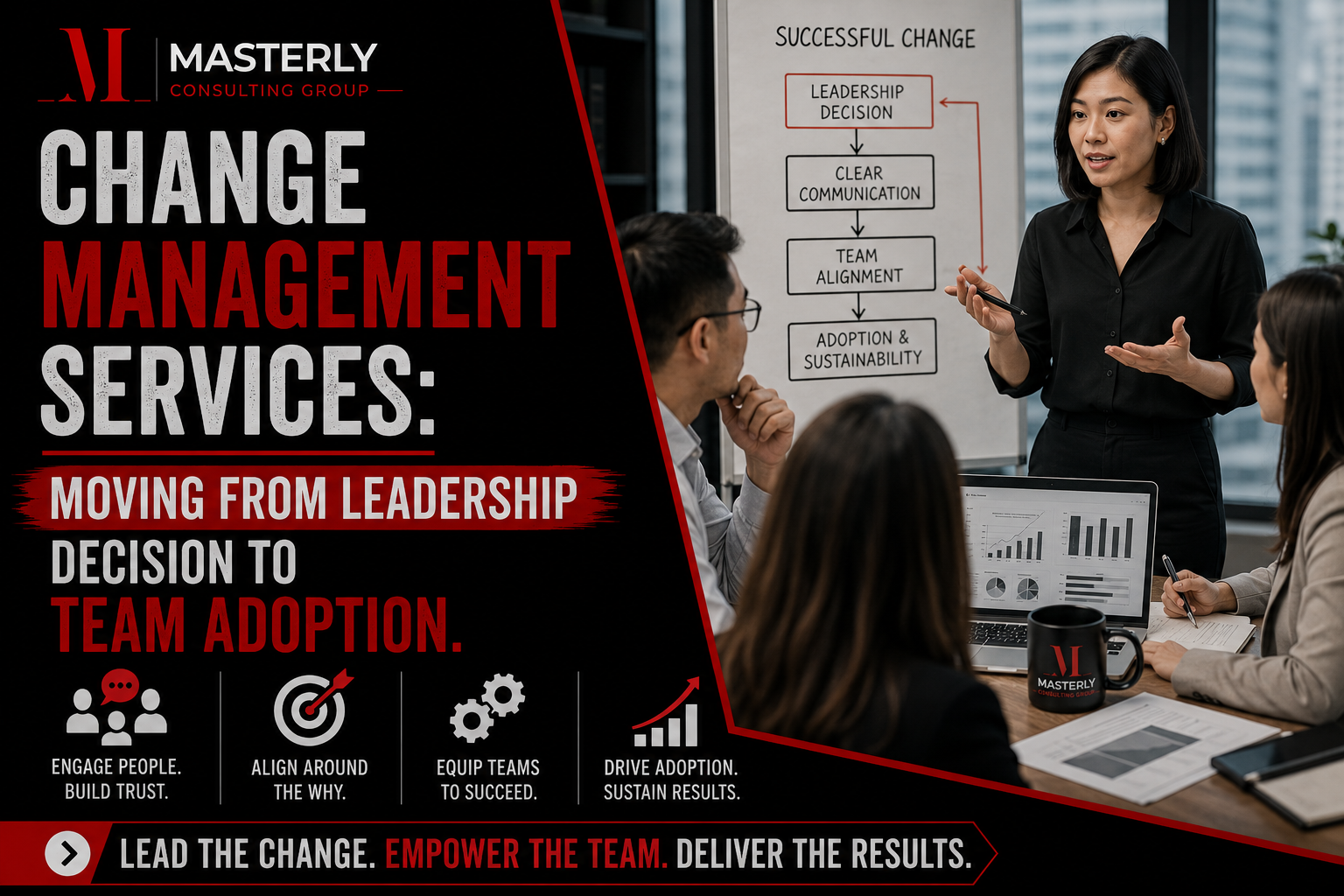
Implementation best practices demand cross-functional alignment. Marketing, operations, and finance must coordinate on resilience priorities. Agile execution - iterative content releases, rapid testing, adjustment by performance data - keeps your strategy responsive. Implementing crisis management governance assigns roles and establishes escalation paths so that when disruption hits, response is immediate, not improvised.
Continuous monitoring using SEMrush analytics means tracking keyword trends (monthly search volume, CPC, difficulty) weekly, watching for competitive shifts, content gaps, and links, and using AI Visibility tracking to see how your brand appears in AI-generated responses. Clear communication is essential for maintaining trust during crises - both internally and with customers who depend on your reliability.
Adjustment protocols based on performance data keep your strategy current. If a particular keyword's search volume plunges or difficulty spikes, reallocate content resources. If running ads becomes cost-inefficient as CPC rises, shift toward organic and owned assets. If visibility in AI summaries lags, restructure content into concise, answer-oriented formats that AI systems prefer to cite. SEO tools provide the data; disciplined response to that data is what separates resilient companies from reactive ones.
Proven Results from Resilient U.S. Businesses
Concrete outcomes demonstrate why resilience investment pays off:
- Traffic resilience in volatile markets: Businesses with established urban digital presence in states like New York absorbed volatility and saw traffic increase by approximately 7.6%, while less-prepared businesses in states like Montana experienced declines of 6.8%, according to SEMrush and Statista e-commerce research.
- AI visibility as a growth lever: Companies optimizing content for AI Overviews and assistant-indexed prompts are capturing an expanding share of discovery traffic. With 126 million U.S. AI search prompts analyzed by SEMrush in 2026, this channel represents material demand that traditional SEO alone cannot capture.
- Multi-channel revenue protection: Businesses leveraging social commerce alongside organic search maintained or grew sales more reliably during policy-driven disruptions, buffered by the roughly $150 billion U.S. social commerce market.
- Financial outperformance: Resilient firms in McKinsey's analysis achieved approximately 25 percentage points higher EBITDA than non-resilient competitors during the 2007–2009 recession - and this gap widened further during the recovery phase. Business resilience creates a competitive advantage during disruptions that compounds over years.
Building a resilient culture fosters collaboration and navigation during crises. Organizations that enhance resilience by maintaining a proactive approach toward risk management consistently outperform those that treat resilience as an afterthought.
Success Stories from Leading Companies
Real results from U.S. businesses that invested in data-driven resilience planning:
- Mid-size e-commerce retailer (consumer electronics, 200+ employees): After tariff-driven traffic losses of approximately 20%, this company pivoted marketing spend to social commerce and AI-optimized content. Within six months, diversified channels recovered 85% of lost revenue and opened new customer segments previously invisible through traditional search alone. Resilience protects brand reputation and customer trust during crises - this company's customer satisfaction scores actually improved during the transition.
- Professional services firm (management consulting, 50 employees): By using competitive analysis and keyword research to identify rising demand for "operational resilience" and "business continuity" content - for example, specific topic clusters clients were starting to search during planning cycles - this firm built a thought leadership position. Organic traffic to their resilience-focused pages grew significantly, generating qualified leads with strong informational and commercial search intent. Cultural and human resilience involves adaptability supported by a culture of continuous learning, and this firm embedded that principle in both their client work and internal operations.
- Regional manufacturer (Midwest, 500+ employees): Diversified suppliers across three continents, reducing single-source dependency from 70% to under 30%. Used SEMrush Traffic & Market data to identify emerging regional demand signals, entering two new state-level markets with targeted content and local SEO. Recovery time from supply disruptions dropped from weeks to days.
Industries We Support Across the United States
Resilience strategies apply differently across sectors - each industry faces unique disruption profiles and requires tailored responses:
- Technology and software companies - Heavily impacted by search and AI trends; resilient firms build strong content authority, invest in AI tools, and maintain distributed remote operations.
- E-commerce and retail businesses - Face shocks from tariffs, supply chain breaks, and shifting consumer behavior. Social commerce diversification and AI discovery optimization are particularly relevant.
- Professional services firms - Depend on trust, visibility, and thought leadership. Creating content on resilience strategy and continuity directly supports lead generation and brand positioning.
- Manufacturing and distribution - Resilience centers on operations and supply chain redundancy, backup sourcing, local and regional supplier networks, and using market data to forecast disruptions.
- Healthcare and biotechnology - Sensitivity to regulation, supply chains for ingredients and equipment, and data protection all demand comprehensive resilience planning.
- Financial services and fintech - Regulatory environment complexity, market shocks, cyber risk, and disruption from AI and privacy laws require layered resilience frameworks. Organizations enhance resilience by maintaining a proactive approach toward risk management in this highly regulated space.

Frequently Asked Questions
What does business resilience implementation typically cost?
Costs vary significantly by company size, industry, and current maturity. Small businesses may invest $5,000–$25,000 in initial digital resilience assessment and strategy, including SEMrush tools at the Guru or Business tier for keyword research, competitive analysis, and traffic monitoring. Mid-market companies typically invest $50,000–$200,000 across digital, financial, and operational resilience components over a twelve-month period. The comparison that matters: the average cost of a single major disruption - lost revenue, brand damage, customer attrition - typically exceeds the total resilience investment by 5–10×. The keyword 'what is keyword search volume' has 410 global searches monthly, illustrating that even niche informational terms generate real demand that resilience-focused content can capture.
How long does it take to see resilience benefits?
Digital marketing resilience delivers early wins within 30–90 days - improved keyword rankings, better SERP feature presence, and initial traffic diversification. Financial and operational resilience components take six to eighteen months to mature fully. Track progress using SEMrush metrics: organic traffic growth, position improvements for target keywords, AI visibility index changes, and revenue attribution from diversified channels. The average number of months to see compounding benefits is typically six to twelve for SEO-driven strategies.
How do we measure resilience effectiveness?
Key performance indicators include: organic traffic trends (overall and by channel), SE ranking positions for resilience-related and core business keywords, AI visibility share in AI-generated responses, SERP feature presence (People Also Ask, featured snippets, AI Overviews), revenue stability across channels, supply chain lead times, and operational uptime during disruptions. Regular assessment cycles - monthly for digital metrics, quarterly for financial and operational - keep your framework current. Keyword search volume estimates monthly searches for specific keywords, and tracking these volumes for your core terms over time reveals whether your market visibility is growing or eroding.
Request a Facilitated Strategy Session for High-Stakes Decisions With Multiple Plausible Outcomes
When leadership faces uncertainty, competing priorities, or several credible paths forward, a structured strategy session can help bring greater clarity to the decision. Masterly Consulting Group can help executive teams examine assumptions, strategic scenarios, decision triggers, and contingency choices so leaders can move forward with a more focused direction.
Call Masterly Consulting Group at (972) 236-5051 or visit https://www.masterlygroup.com/ to request a facilitated strategy session.