How Business Consulting Services Build Resilience in Small Businesses
The Reality Small Businesses Face in Today’s Economy
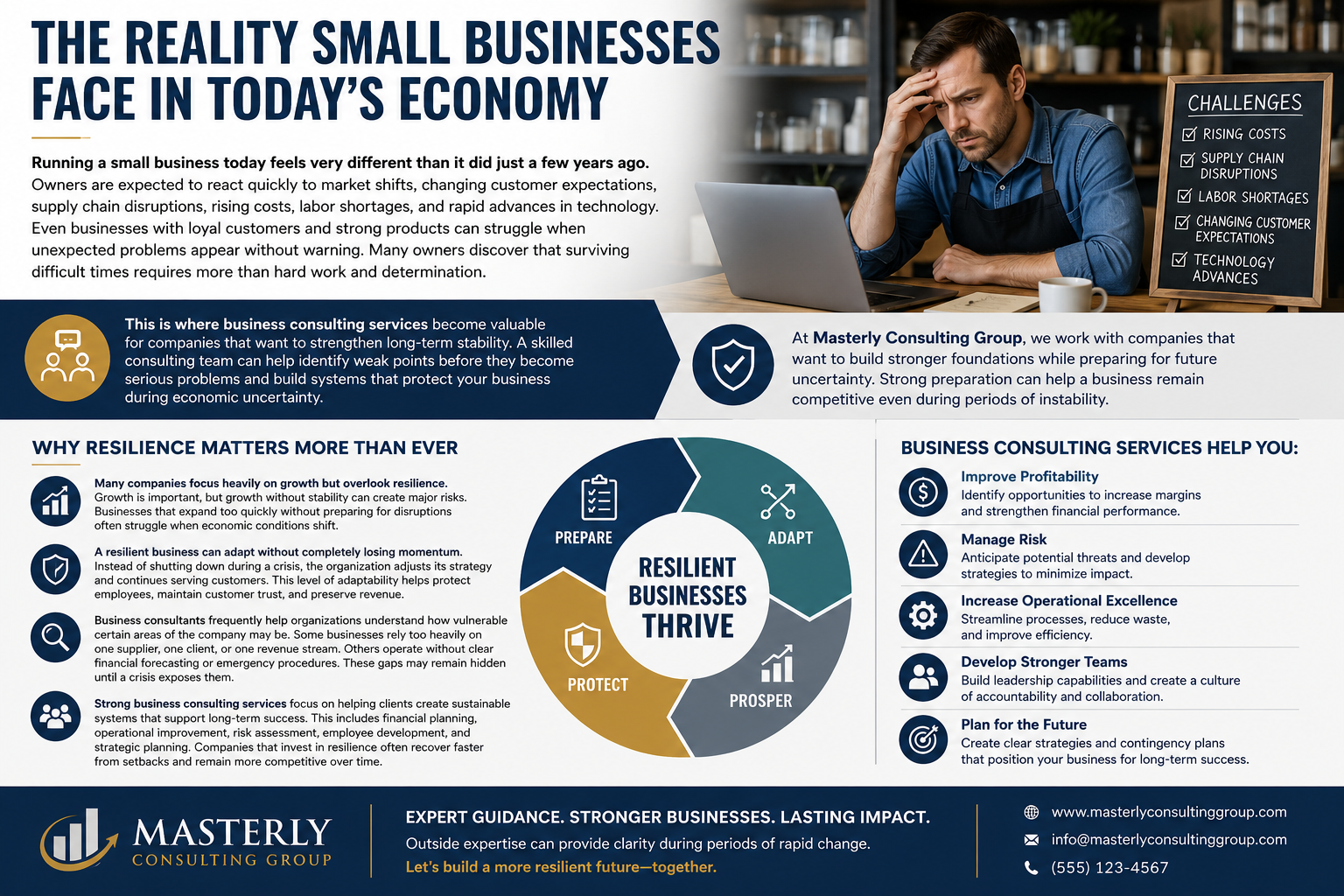
Running a small business today feels very different than it did just a few years ago. Owners are expected to react quickly to market shifts, changing customer expectations, supply chain disruptions, rising costs, labor shortages, and rapid advances in technology. Even businesses with loyal customers and strong products can struggle when unexpected problems appear without warning. Many owners discover that surviving difficult times requires more than hard work and determination.
This is where business consulting services become valuable for companies that want to strengthen long-term stability. Business owners often spend most of their time handling daily operations, customer concerns, payroll, and marketing responsibilities. While focusing on those immediate tasks is necessary, many businesses fail to develop systems that protect the company during economic uncertainty. A skilled consulting team can help identify weak points before they become serious problems.
At Masterly Consulting Group, we work with companies that want to build stronger foundations while preparing for future uncertainty. Resilient businesses do not simply react to problems after they occur. Instead, they create adaptable systems, strengthen leadership, improve communication, and develop practical contingency plans that help the company move forward during difficult times. Strong preparation can help a business remain competitive even during periods of instability.
Business consulting is no longer something only large corporations use. Today, small business owners across many sectors are seeking professional guidance to improve profitability, manage risk, and increase operational excellence. As the consulting industry continues to grow, more owners are recognizing that outside expertise can provide clarity during periods of rapid change.
Why Resilience Matters More Than Ever
Many companies focus heavily on growth but overlook resilience. Growth is important, but growth without stability can create major risks. Businesses that expand too quickly without preparing for disruptions often struggle when economic conditions shift. Resilience allows a company to continue operating effectively even when facing unexpected challenges.
A resilient business can adapt without completely losing momentum. Instead of shutting down during a crisis, the organization adjusts its strategy and continues serving customers. This level of adaptability helps protect employees, maintain customer trust, and preserve revenue during uncertain periods.
Business consultants frequently help organizations understand how vulnerable certain areas of the company may be. Some businesses rely too heavily on one supplier, one client, or one revenue stream. Others operate without clear financial forecasting or emergency procedures. These gaps may remain hidden until a crisis exposes them.
Strong business consulting services focus on helping clients create sustainable systems that support long-term success. This includes financial planning, operational improvement, risk assessment, employee development, and strategic planning. Companies that invest in resilience often recover faster from setbacks and remain more competitive over time.
Understanding the Role of Business Consulting in Risk Management
Risk management is not about avoiding every problem. Instead, it involves identifying potential threats and preparing realistic responses before problems escalate. Many consulting firms help businesses evaluate risks related to finances, staffing, cybersecurity, supply chains, legal compliance, and customer retention.
Effective business consulting begins with research and analysis. Consultants assess how the business currently operates and identify vulnerabilities that could affect future stability. This process often includes reviewing financial statements, operational procedures, vendor relationships, and technology systems.
Many management consultants also examine leadership structures and communication processes. Poor internal communication can increase confusion during emergencies. When employees do not understand responsibilities or contingency plans, the entire organization may struggle to respond effectively.
Professional consulting firms understand that every business faces unique challenges. A manufacturing company may face supply chain concerns, while healthcare providers may focus more heavily on regulatory compliance and staffing shortages. Consultants create customized recommendations based on the company’s specific industry, goals, and operational structure.
Business leaders who work with experienced consultants often gain better visibility into their organization’s strengths and weaknesses. This level of awareness helps companies prepare more effectively for future disruptions.
How Contingency Planning Protects Small Businesses
Contingency planning is one of the most important parts of resilience. Unfortunately, many small business owners believe contingency plans are only necessary for large corporations. In reality, smaller businesses are often more vulnerable because they usually have fewer financial reserves and fewer backup systems.
A contingency plan outlines how the business will respond during emergencies or disruptions. This may include procedures for handling technology failures, natural disasters, economic downturns, legal disputes, or staffing shortages. Without clear plans in place, businesses often lose valuable time trying to determine their next steps during a crisis.
Business consultants help organizations create practical plans that are realistic and easy to implement. Complicated plans that employees cannot follow rarely provide real value. The goal is to create straightforward systems that improve response times and reduce confusion.
Some common areas included in contingency planning include:
- Emergency communication procedures
- Backup vendor relationships
- Data recovery systems
- Financial reserve planning
- Employee responsibilities during disruptions
- Customer communication strategies
- Cybersecurity response procedures
Strong management consulting services also help companies test their plans periodically. A plan that exists only on paper may not work effectively in real situations. Consultants often recommend training exercises and simulations that allow the team to prepare for different scenarios.
Prepared businesses tend to recover more quickly because they already understand the steps necessary to maintain operations. Preparation reduces panic and allows leadership to make more informed business decisions under pressure.
Financial Stability and Long-Term Resilience
Financial uncertainty is one of the biggest threats facing small business owners. Even profitable businesses can experience cash flow problems if they are not properly prepared for market fluctuations or unexpected expenses. This is why financial planning remains a major component of business consulting.
Management consulting firms frequently help businesses strengthen budgeting systems and improve forecasting processes. Owners often underestimate future expenses or fail to prepare for seasonal revenue changes. Professional consultants can identify patterns and help businesses prepare more effectively for financial shifts.
Financial resilience also involves improving profitability without sacrificing service quality. Some businesses overspend in areas that generate little return while underinvesting in areas that support growth. Consultants assess spending patterns and recommend strategies that align with long-term business goals.
Business consulting services may also include guidance related to:
- Expense reduction strategies
- Revenue diversification
- Financial reporting systems
- Pricing analysis
- Debt management
- Investment planning
- Emergency reserve development
Small business consultants understand that many owners operate with limited resources. The goal is not simply to cut costs but to improve operational efficiency while protecting the company’s long-term health.
Strong financial systems provide greater flexibility during uncertain periods. Businesses with better cash flow management can respond more effectively to market changes and unexpected disruptions.
Building Adaptable Leadership Teams
Strong leadership plays a major role in resilience. Companies often mirror the mindset and decision-making abilities of their leadership team. During difficult periods, employees look to management for direction, stability, and reassurance.
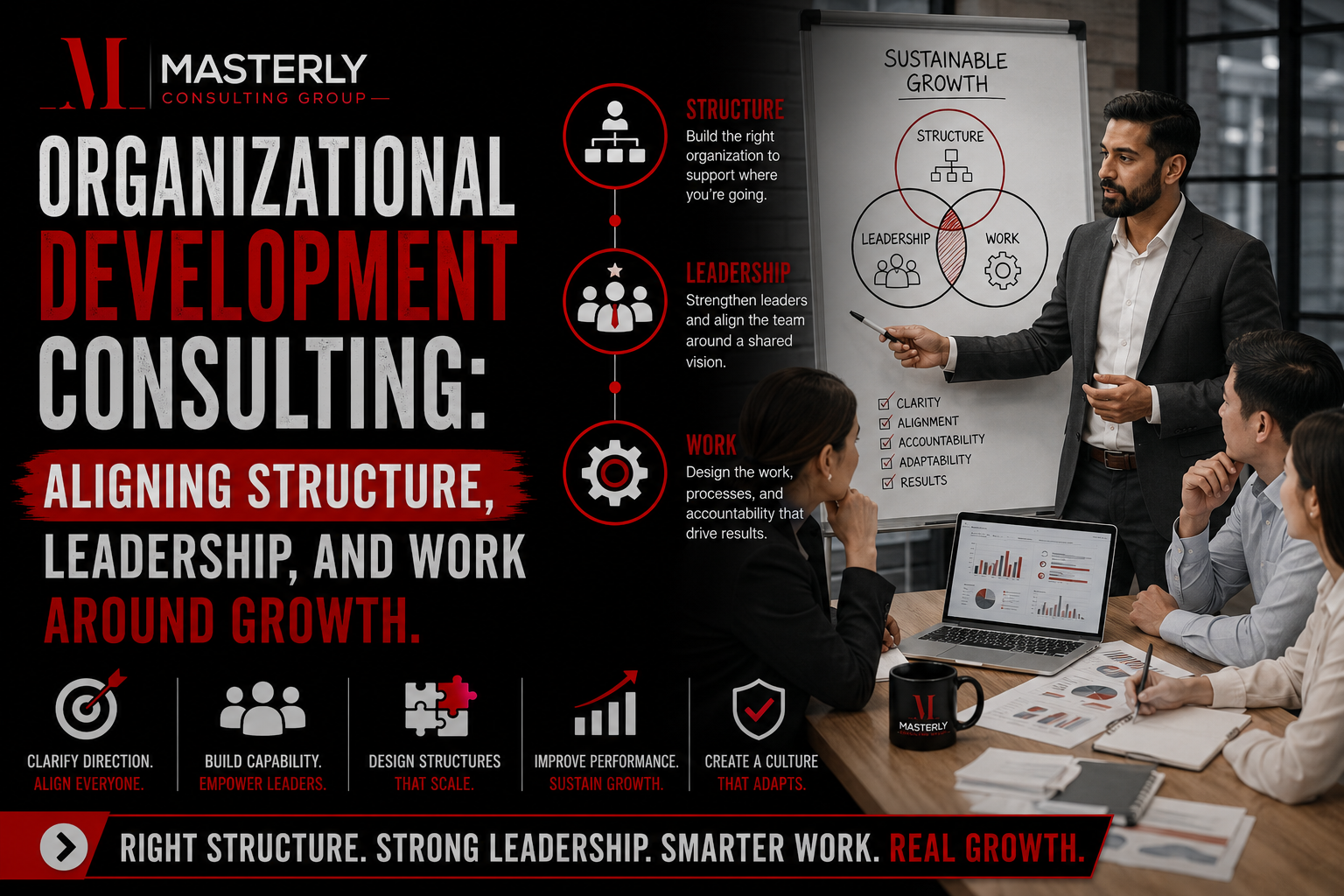
Business consultants frequently work with owners and executives to improve leadership development and communication strategies. Adaptable leaders are better prepared to guide employees through change while maintaining morale and productivity.
Management consultants may assist with leadership training that focuses on:
- Crisis communication
- Conflict resolution
- Decision-making under pressure
- Team accountability
- Employee engagement
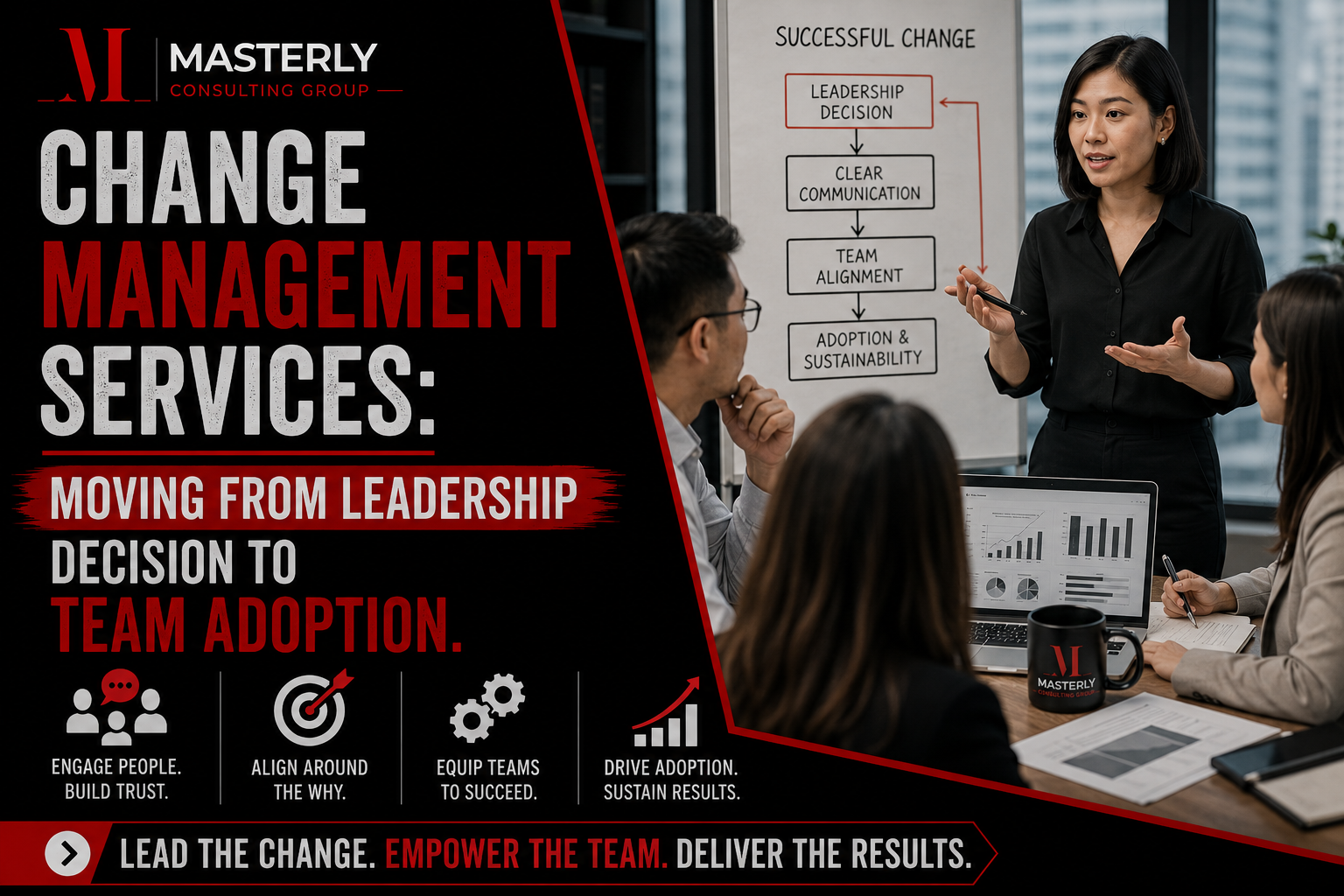
- Change management
- Strategic thinking
Some consulting firms also offer training programs that help leadership teams improve collaboration across departments. Strong internal communication often reduces confusion and helps organizations respond more efficiently during stressful situations.
Business management becomes much more effective when leaders understand how to balance short-term pressures with long-term strategy. Owners who focus only on immediate problems may overlook larger operational risks that continue growing over time.
Organizations that invest in leadership development often experience stronger employee retention, improved morale, and greater organizational stability.
The Connection Between Technology and Business Resilience
Technology has become essential for nearly every industry. However, many small businesses still operate with outdated systems that increase operational risk. Weak cybersecurity, poor data management, and inefficient software can create major vulnerabilities during periods of disruption.
Business consulting services often include evaluations of technology infrastructure and operational systems. Consultants assess whether the company’s current tools support efficiency, security, and scalability. In many cases, outdated systems slow productivity and increase operational costs.
Information technology improvements can help businesses:
- Improve communication
- Automate repetitive tasks
- Strengthen cybersecurity
- Improve customer experience
- Protect sensitive data
- Increase operational efficiency
- Support remote work capabilities
The consulting industry has increasingly focused on helping businesses adapt to changing technology demands. Many companies struggle to determine which systems are worth investing in and which tools provide the greatest long-term value.
Consultants help business owners avoid expensive mistakes by recommending solutions aligned with the company’s goals and budget. Technology investments should support both immediate operations and future growth.
Businesses that embrace innovation are often more adaptable during changing market conditions. Flexible technology systems allow organizations to adjust faster when customer behavior or operational demands change.
Why Operational Efficiency Supports Stability
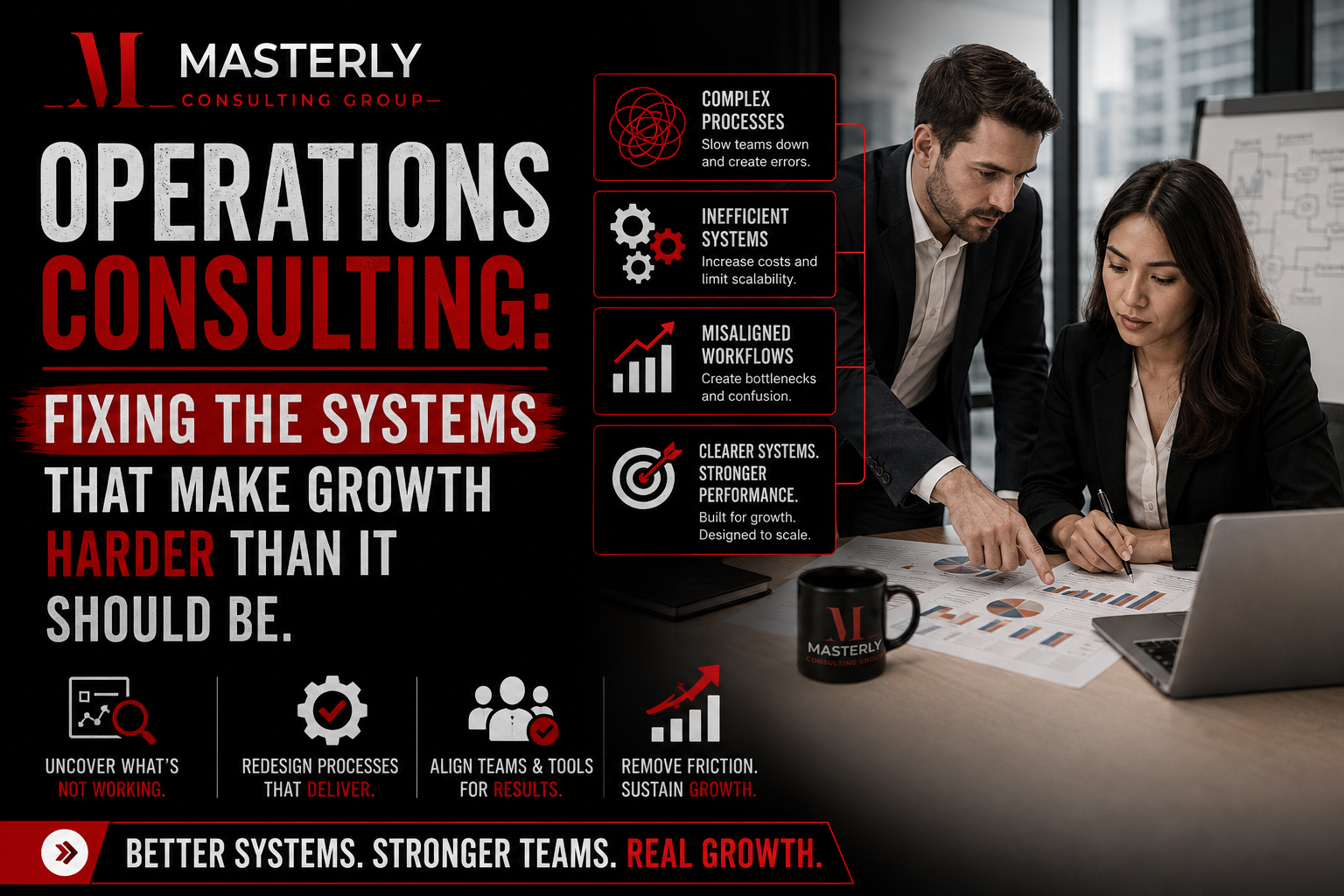
Operational efficiency directly impacts resilience. Businesses with inefficient systems often struggle during periods of economic pressure because waste and confusion consume valuable resources. Improving operations can strengthen profitability while making the organization more adaptable.
Business consultants examine workflows, staffing structures, inventory management, communication systems, and production processes to identify opportunities for improvement. Even small operational changes can significantly improve performance over time.
Operational excellence often involves simplifying procedures and eliminating unnecessary complications. Many businesses develop inefficient habits over the years that reduce productivity without leadership fully recognizing the problem.
Consultants may recommend changes related to:
- Workflow automation
- Inventory management
- Employee scheduling
- Vendor coordination
- Customer service procedures
- Project management systems
- Performance tracking
Consulting firms often emphasize measurable results when improving operations. Clear performance indicators help businesses assess whether changes are delivering the expected value.
Companies that improve operations are generally better positioned to handle sudden disruptions because they operate with greater flexibility and clarity.
Marketing Strategies That Help Businesses Adapt
Many companies reduce marketing efforts during uncertain economic periods. While this reaction may seem logical, completely reducing visibility can damage long-term growth and customer retention. Smart marketing strategies help businesses remain connected to their audience even during challenging periods.
Business consulting often includes evaluating current marketing systems and identifying ways to improve customer engagement. Consultants help businesses create strategies that align with changing consumer behavior and market demand.
Strong marketing plans may include:
- Digital marketing campaigns
- Customer retention strategies
- Brand positioning
- Content development
- Social media engagement
- Reputation management
- Market research initiatives
The consulting industry recognizes that customer expectations continue evolving rapidly. Businesses that fail to adapt their messaging or service delivery may lose relevance over time.
Business consultants help companies assess which marketing investments generate the strongest return while avoiding unnecessary spending. Effective marketing should support both revenue generation and long-term brand stability.
Adaptable marketing strategies allow businesses to respond more effectively when market conditions change unexpectedly.
How Human Resource Planning Strengthens Resilience
Employees are one of the most important parts of any organization. Businesses that fail to support their workforce often struggle with turnover, low morale, and inconsistent performance. During periods of uncertainty, strong employee management becomes even more important.
Business consulting services frequently include workforce planning and organizational development support. Consultants help businesses create policies and systems that improve communication, accountability, and employee engagement.
Human resource planning may involve:
- Employee retention strategies
- Leadership training
- Hiring procedures
- Workplace policies
- Performance management
- Conflict resolution systems
- Employee development initiatives
Many management consulting firms also offer training programs designed to strengthen workplace culture and improve adaptability. Employees who feel supported are often more willing to assist the organization during difficult periods.
Business leaders who invest in workforce development often build stronger, more resilient teams capable of handling change more effectively.
Adapting to Industry Changes and Market Shifts
Every industry experiences change. Consumer preferences evolve, regulations shift, and technology continues advancing rapidly. Businesses that resist adaptation often struggle to remain competitive.
Business consultants help organizations monitor industry trends and prepare for future developments. This may include research related to customer behavior, competitor activity, economic conditions, or emerging technology.
Some industries face particularly rapid transformation. Healthcare organizations must adapt to changing regulations and staffing shortages. Manufacturing companies often face supply chain concerns and rising operational costs. Engineering firms may need to integrate new technology systems to remain competitive.
Consultants assist businesses in developing flexible strategies that support long-term sustainability. Instead of reacting emotionally to every market change, resilient companies evaluate data carefully and adjust strategically.
Business consulting services provide outside perspectives that help owners recognize opportunities they may otherwise overlook.
Strategic Planning for Long-Term Success
Strategic planning helps businesses remain focused during uncertain periods. Without clear direction, companies often react impulsively to short-term challenges instead of following structured long-term goals.
Business consultants work with owners to create practical plans aligned with company priorities. Strategic planning may include revenue targets, expansion plans, staffing goals, technology investments, or operational improvements.
Strong planning requires balancing ambition with realistic expectations. Consultants help businesses assess available resources and develop achievable milestones that support sustainable growth.
Effective strategy development often includes:
- Market analysis
- Financial forecasting
- Risk assessment
- Competitive analysis
- Resource allocation
- Performance measurement
- Operational planning
Business owners frequently benefit from outside guidance because consultants can provide objective feedback without emotional attachment to internal processes.
Organizations with strong strategic planning are usually better prepared to respond calmly and effectively during uncertain situations.
How Advisory Services Support Better Decision-Making
Many owners feel isolated when making major business decisions. Running a company involves constant pressure, and leaders often lack trusted advisors who understand complex operational challenges.
Advisory services provide business owners with experienced guidance that supports informed decision-making. Consultants evaluate risks, opportunities, and operational concerns while helping leaders assess possible outcomes.
Business consultants often assist clients with decisions related to:
- Expansion opportunities
- Staffing changes
- Contract negotiations
- Acquisitions
- Technology investments
- Marketing strategies
- Financial restructuring
Strong advisory services help businesses avoid reactive decision-making. Instead of making choices based solely on emotion or urgency, owners can evaluate situations more strategically.
The value of professional advice often becomes especially clear during difficult economic periods when mistakes can carry greater financial consequences.
The Importance of Industry Expertise
Not all consultants provide the same level of expertise. Effective consulting firms understand the specific challenges associated with different industries. Businesses often benefit most from advisors who understand the operational realities of their field.
For example, healthcare companies face compliance concerns that differ greatly from manufacturing operations. Engineering firms may prioritize project management systems and technology integration. Retail businesses may focus more heavily on customer behavior and marketing strategies.
Industry-specific knowledge allows consultants to provide more practical recommendations that align with real operational needs.
At Masterly Consulting Group, we understand that every business operates within a unique environment. Our consultants focus on creating customized solutions rather than relying on generic recommendations that may not fit the company’s goals or structure.
Measuring Progress and Maintaining Accountability
One of the biggest advantages of professional consulting is accountability. Many business owners have strong ideas but struggle to implement consistent follow-through. Consultants help organizations establish measurable goals and track progress over time.
Performance tracking allows businesses to identify what is working and where adjustments may be necessary. This process supports continuous improvement while helping companies remain focused on long-term priorities.
Consultants often help businesses create systems for:
- Financial tracking
- Employee performance measurement
- Customer satisfaction monitoring
- Operational analysis
- Marketing performance evaluation
- Revenue forecasting
Organizations that consistently measure progress are often better prepared to adapt because they understand their performance trends more clearly.
How Small Businesses Can Compete More Effectively
Large corporations often have access to bigger budgets and larger teams, but small business owners still possess important advantages. Smaller organizations can often adapt faster and build stronger customer relationships when they operate strategically.
Business consulting services help small businesses maximize these advantages while improving operational stability. Consultants help owners identify opportunities for innovation and differentiation within competitive markets.
Strong consulting support can help businesses:
- Improve customer experience
- Strengthen operational systems
- Increase profitability
- Reduce unnecessary costs
- Improve internal communication
- Develop scalable processes
- Build long-term resilience
The consulting industry continues evolving because businesses increasingly recognize the value of outside expertise in competitive environments.
Learning From Proven Industry Practices
Experienced consultants often draw from proven industry practices that have delivered measurable results for other organizations. This allows businesses to avoid repeating common mistakes that slow growth or reduce profitability.
Business consultants frequently analyze successful operational models and adapt relevant strategies to fit the client’s needs. While every company is different, certain principles consistently support stronger business performance.
This may involve improving communication structures, refining customer service procedures, strengthening accounting systems, or modernizing technology infrastructure.
Companies that remain open to learning and innovation are often better positioned for long-term success.
The Growing Demand for Professional Consulting Services
The demand for professional consulting continues increasing across many sectors. Economic uncertainty, rapid technology changes, and evolving customer expectations have made resilience more important than ever.
Many management consulting firms now work with organizations of all sizes, not just large corporations. Small business owners increasingly understand that proactive planning can reduce future risks while improving long-term stability.
The rise of remote work, cybersecurity concerns, and digital transformation has also expanded the role of consultants in modern business operations.
As businesses continue facing new challenges, the need for practical expertise and adaptable strategy development will likely continue growing.
Building a Future-Focused Organization
Businesses that focus only on short-term survival often struggle to achieve lasting growth. Long-term resilience requires balancing present demands with future planning.
Future-focused organizations invest in:
- Leadership development
- Technology upgrades
- Employee training
- Strategic planning
- Operational improvement
- Customer engagement
- Financial preparedness
Business consultants help companies prepare for uncertainty while remaining positioned for opportunity. Resilient organizations understand that adaptability is not a temporary solution but an ongoing process.
Strong preparation today often determines how effectively a business responds tomorrow.
Creating Confidence During Uncertain Times
Uncertainty is unavoidable in business. Economic shifts, changing consumer behavior, labor shortages, and technology disruptions will continue affecting companies across every industry. While no business can eliminate every risk, preparation and adaptability can significantly reduce vulnerability.
Business consulting services provide the structure, expertise, and guidance many organizations need to strengthen operations and prepare for the future. Through contingency planning, risk management, operational improvement, and strategic development, businesses can become more resilient while maintaining long-term profitability.
At Masterly Consulting Group, we understand that every business faces unique challenges. Our team works closely with clients to assess operations, identify opportunities, and develop practical strategies that support sustainable growth and long-term stability. Whether your company needs support with management consulting, operational efficiency, technology planning, marketing strategy, or organizational development, our consultants are committed to helping businesses move forward with confidence.
If your business is ready to strengthen resilience, improve profitability, and prepare for future opportunities, Masterly Consulting Group is here to help. Contact us at (888) 209-4055 to book a free consultation. Our team can answer your questions, discuss your goals, and help create customized solutions designed to support long-term business success.