Business Operations: What Growing Companies Need to Standardize Before Complexity Takes Over
Introduction: When Growth Starts to Break Your Business Operations
Picture a B2B SaaS company that doubled headcount between 2022 and 2024. Revenue climbed. The team celebrated new logos. But behind the numbers, things started fraying. Sales closed deals that customer success didn't know about until a week later. Finance and the CRM showed different contract values for the same account. Every board meeting triggered a two-week fire drill to reconcile reports nobody trusted.
This is what happens when business operations stay informal while everything else scales. Business operations are the daily tasks and systems a company uses to produce and deliver its goods and services, and operations have a direct impact on nearly every major measure of business performance. When those tasks and systems aren't standardized, growth doesn't simplify your company - it magnifies every gap. Operations determine how a company executes its strategy, and without that bridge, strategy stays aspirational.
This article covers which elements of business operations growing companies must standardize early - especially standard operating procedures, communication, and accountability - before complexity erodes margins and morale. The opinions expressed here focus on practical, mid-market company realities (10–500 employees) rather than enterprise-only theory.

What Business Operations Actually Covers (Beyond "Getting Stuff Done")
Business operations refer to the recurring activities, workflows, and decisions that turn strategy and resources into products, services, and cash flow. Business operations management is the discipline that designs, monitors, and improves those recurring workflows. Unlike general management - which sets targets and budgets - business operations management owns operating processes, cross-team handoffs, and system design.
Business operations include process management, supply chain, human resources, and financial control. Effective business operations consist of systems, processes, people, and resources working together. The core operating domains in most growing companies include:
- Revenue operations: lead generation through qualification, quoting, contracting, and invoicing
- Customer operations: onboarding, support, renewals, and expansions
- People operations: hiring, employee onboarding, performance management, offboarding
- Financial operations: quote-to-cash cycle, expense management, collections
The simplest way to understand the relationship: strategy is the what and why at a quarterly or annual level. Operations is the how, when, and with whom, every week and every day.
Good operations make it easier to increase sales without rising costs and complexity. The meaning of this becomes clear across industries. Healthcare operations include patient intake and managing medical supply chains. In education, operations involve scheduling classes and managing student records. Even dairy farms rely on systems for milk harvesting and animal feeding. The principles are the same regardless of sectors - once a company grows past roughly 20–30 people, business operations must become intentional and documented rather than driven by founder memory.
Core Components of Modern Business Operations
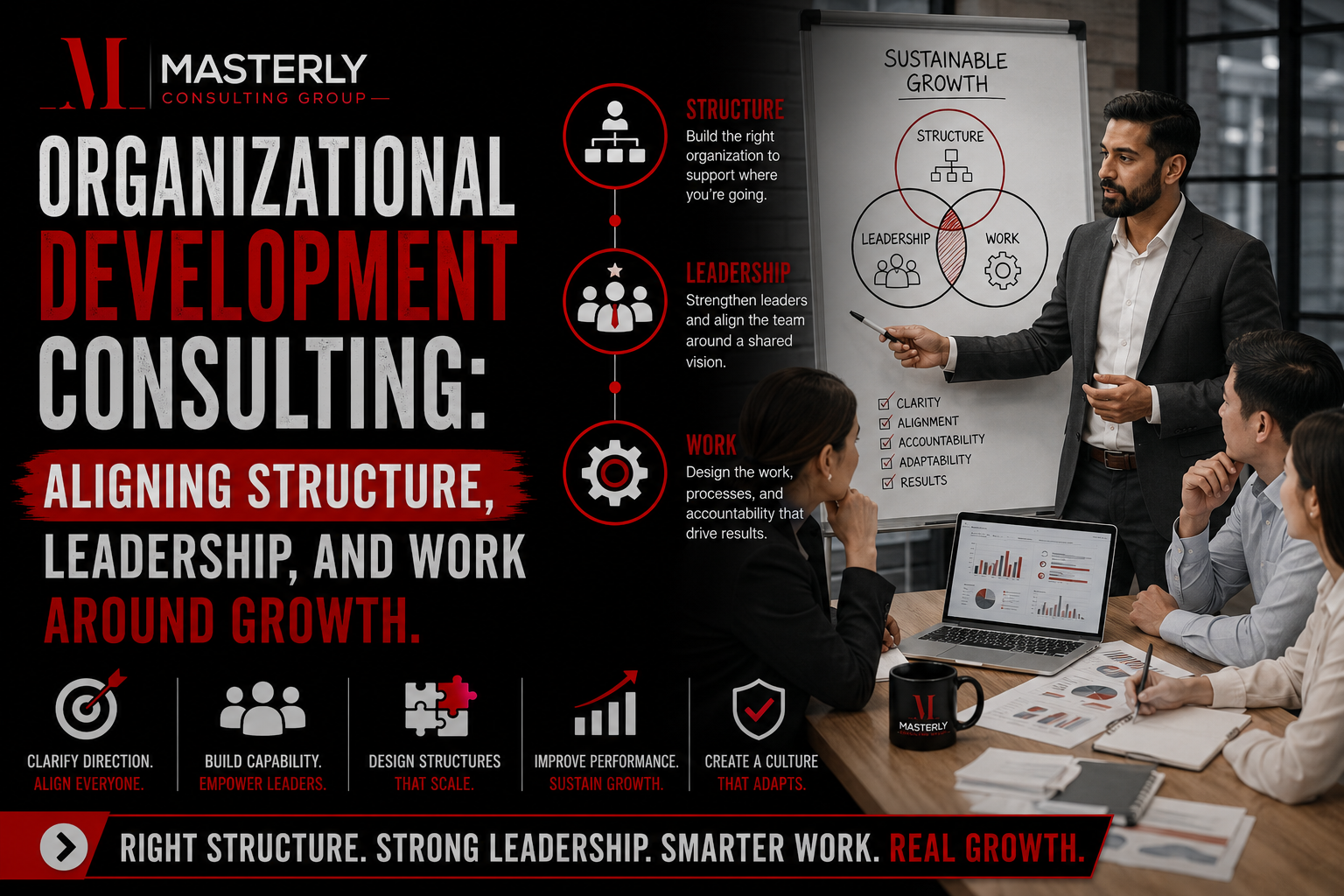
Modern business operations rest on four pillars: people, processes, technology, and infrastructure. Four core components of business operations are people, processes, technology, and infrastructure, and each one needs attention to prevent chaos as scale increases.
People means clear roles, decision rights, and accountability for each recurring outcome. Who owns customer renewals versus expansions? Who signs off on vendor contracts? Effective business operations require collaboration among employees and management with defined ownership, not just good intentions.
Processes are structured workflows that keep organizations organized. Standard operating procedures, playbooks, and checklists define the usual path for key workflows - lead qualification, incident response, order fulfillment. Without them, every task is performed differently depending on who handles it.
Technology enables modern operations through automation and digital systems. CRM, project management platforms, help desks, finance and HR systems are the tools needed for day-to-day work. But tool sprawl without process discipline creates noise, not leverage.
Information and metrics round out the picture: shared definitions (what counts as a "qualified opportunity"), a single source of truth, and operational dashboards that make performance visible. Infrastructure includes both physical facilities and digital systems, though this article focuses primarily on workflows and business systems. Effective operations maintain consistent standards and ensure compliance with regulations and policies across every pillar.

The Hidden Costs of Unstructured Growth
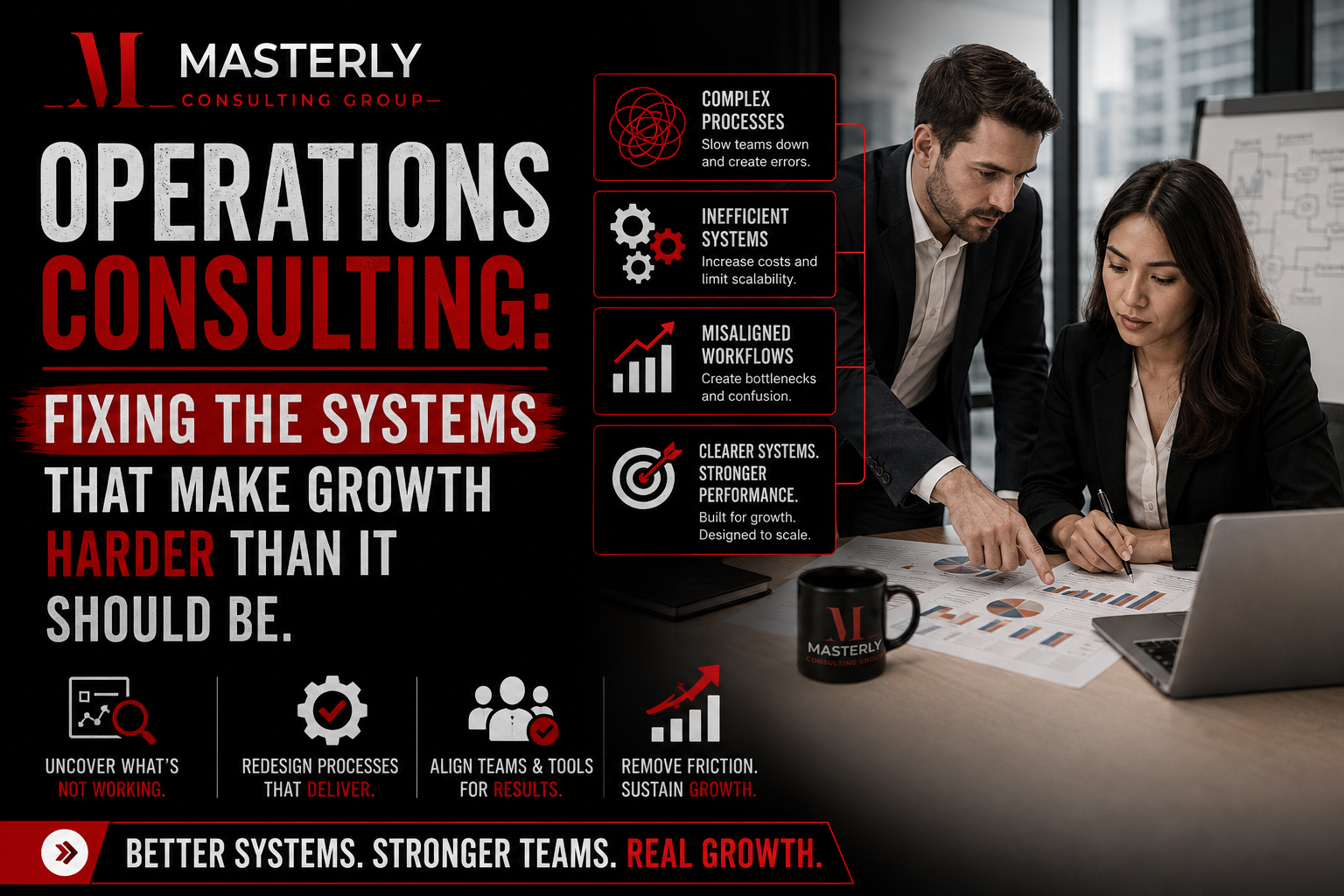
Most leaders feel these problems as symptoms - missed deadlines, unhappy teams, rising costs - without recognizing they're rooted in weak business operations. The following examples show up repeatedly in growing companies:
- Duplicate data entry between sales and finance because systems aren't connected
- Three teams emailing the same customer with conflicting information
- Support agents re-solving identical issues because no documented procedures exist
- Qualified leads lost in handoffs between marketing and sales (in one case, 23% of qualified leads disappeared this way)
Poor handoffs between teams create rework, escalations, and churn that rarely appear clearly on a P&L statement. Reliable operations help a company deliver products and services on time and at expected quality. When that reliability breaks down, customer experience degrades invisibly until it shows up as lost renewals.
Strong operations require careful control of budgets, cash flow, costs, pricing, and resource allocation. Without standard operating procedures, onboarding time balloons - new hires take months to become productive because the "process" is tribal knowledge spread across Slack threads and old decks.
The cultural cost is equally damaging. Without clear accountability and workflows, top performers end up as informal "human routers," burning out while the organization becomes dependent on a few individuals. When there are no written procedures for approvals, privacy controls, or financial steps, audit and security risks rise as data volume and headcount increase. Strong business operations create a foundation for profitability and customer loyalty. Their absence creates the opposite.
Which Operating Processes You Should Standardize First
Not every process needs documentation on day one. Focus on the workflows that cross teams and touch revenue, risk, or customer experience. The following examples represent high-leverage starting points:
- Revenue spine: lead intake, qualification, opportunity management, quoting, contracting, and invoicing - each with a simple SOP that explains steps, roles, and tools needed
- Customer onboarding and handoffs: define the standard journey from signed deal to "live and happy" customer, including kick-off, configuration, training, and go-live checkpoints
- Incident and escalation management: how issues are reported, triaged, prioritized, and communicated across operations, engineering, and customer teams
- Hiring and employee onboarding: standardized requisition approval, interview steps, offer process, and a 30–60–90 day plan template aligned with job-specific procedures. HR tasks like hiring and training are key business operations examples
- Financial operations (quote → order → invoice → cash): consistency here reduces revenue leakage, billing disputes, and end-of-month scrambling. Order fulfillment procedures are essential in business operations
- Leadership and meeting rhythms: define a standard weekly leadership meeting agenda, monthly operating review, and quarterly planning cadence - these are operating processes too
Streamlined processes reduce waste and lower costs. In many cases, one step toward standardizing a single high-impact workflow creates momentum for the rest.

Designing Effective Standard Operating Procedures (SOPs)
Standard operating procedures improve work consistency and reduce errors. They are the backbone of scalable business operations because they replace tribal knowledge with a reference anyone can access. SOPs help employees know what to expect in their tasks, which removes ambiguity and the need for constant supervisor input.
A useful SOP includes:
- Clear title, purpose, scope, and owner
- Effective date and revision history
- Step-by-step instructions written as short, imperative sentences ("Open the CRM," "Verify billing address," "Update case status to Resolved")
- Tools and materials needed
- Decision points or compliance notes where relevant
Choose the right format based on complexity: simple checklists for routine tasks, hierarchical steps for longer processes, and basic flowcharts for workflows with several decision points. Tailor the detail level to the user - more detail for new-hire-facing procedures, more concise overviews for experienced teams with links to deeper references.
Well-written SOPs enhance communication among team members by giving everyone the same reference point. SOPs can reduce training time for new employees - in one instance, introducing 23 SOPs cut new-hire ramp time from 15 days to 5 days. Effective SOPs lead to predictable results in business operations, and they must be living documents: assign each SOP an owner who reviews it on a set cadence (quarterly, or after major tool or policy changes).
Building Accountability Into Workflows and Handoffs
Accountability in business operations means clearly defined ownership for outcomes, not blame after failure. Without it, work gets performed but nobody can tell you who is responsible when something falls through.
RACI (Responsible, Accountable, Consulted, Informed) is a practical method for clarifying who owns each step in a workflow and each cross-team handoff. For instance:
- Who is accountable for data quality in the CRM?
- Who is responsible for confirming a customer's go-live date?
- Who must be informed after a major incident in a distributed, remote team?
Map handoffs explicitly. Document exactly when ownership moves from one role or team to another, what information must be complete, and which system fields signal the change. Embed accountability signals directly into business systems - required fields and owner assignments in a ticketing tool mean no request or customer issue can exist without a clear owner.
Defining and tracking KPIs helps measure operational success. Visible dashboards - on-time delivery of onboarding tasks, SLA adherence, resolution times - encourage teams to fix breakdowns in the workflow instead of working around them. In one company, leadership time spent on operational problems dropped from 65% to 30% after implementing delegation matrices and clear ownership.
Improving Communication and Meeting Rhythms Across Operations
Most operational friction is actually communication friction. The solution isn't more messages - it's better structure.
A practical operating cadence looks like this:
- Weekly check-ins: focus on current workflows, blockers, and cross-team coordination
- Monthly operating reviews: examine KPI trends, surface recurring issues, and prepare input for leadership
- Quarterly reviews: update priorities, plan capacity, and align on development goals
Each meeting should have a standard agenda with a clear purpose, required inputs, expected decisions, and documented outputs. Meetings without these elements become status-only sessions that waste everyone's effort.
Improve communication by choosing appropriate channels: async updates for routine status, real-time calls for complex decisions, and system notifications for workflow events. Define communication norms inside the tools your teams use daily so people know where to look and how quickly to respond.
Investing in ERP systems can streamline processes and improve communication across departments. Training and empowering staff leads to innovation and improved results - but only when communication norms give people the clarity to act. Good operational communication reduces reliance on individual heroes and makes handoffs between time zones or hybrid workplaces more predictable.

Using Business Systems and Data to Run Operations, Not Just Record Them
Business systems - CRMs, ERPs, help desks, HRIS, and project management tools - serve as the nervous system of modern operations. They should enforce process, not just store records.
Start by rationalizing your tool stack. In one company audit, 23 tools were in use but only 12 were actively useful. List and evaluate each system's role in major workflows, then remove or consolidate overlapping tools that confuse ownership and data sources.
A single source of truth for key data entities (accounts, contacts, products, subscriptions, employees) eliminates the drag of inconsistent definitions. Technology enables automation of repetitive tasks in operations, and digital systems enhance accuracy and speed in business operations. Workflow management systems increase productivity and reduce costs when they're configured to match your actual processes.
Cloud-based software has become standard across various sectors, and automation in HR saves time and reduces errors in processes like onboarding and payroll. Configure systems to enforce standard operating procedures through required fields, approval flows, templates, and automated reminders triggered by workflow milestones.
Treat data quality as an operating process. Regular operational audits identify bottlenecks and redundancies. Schedule audits, run exception reports, and assign clear owners for fixing recurring data issues. Without this control, even the best systems will degrade over time.
How to Start an Operational Review When Things Already Feel Chaotic
Leaders typically tackle business operations only after recurring breakdowns appear across multiple teams. That's normal. The progress starts with recognizing the pattern and deciding to act.
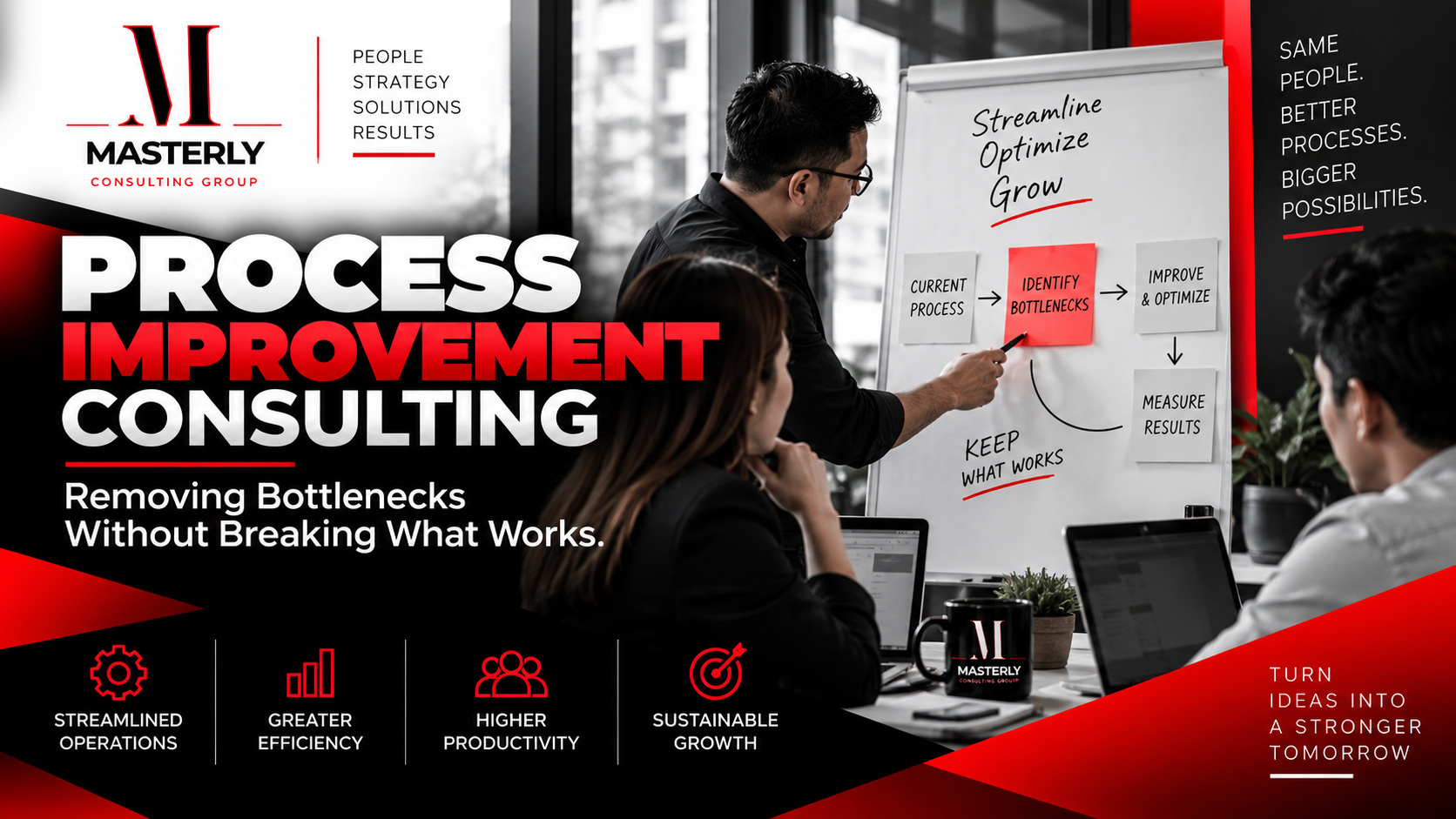
A practical first step is a 30–60 day operational review focused on mapping 3–5 critical workflows end-to-end. Document handoffs, owners, tools, and pain points. Run structured interviews and workshops with frontline employees to learn how work actually gets done - the practice on the ground often differs from what managers assume.
Prioritize improvements by scoring issues based on impact and effort. Choose a small number of high-leverage fixes for the next quarter: one standardized intake process, one improved SOP library, one clarified handoff. This isn't an attempt to transform everything at once. It's developing the discipline to prepare your organization for its next stage of growth.
Treat this as an ongoing discipline. Incorporate operational reviews into annual planning and major growth milestones - before entering new markets, doubling headcount, or raising your next round. The companies that scale successfully aren't the ones with the best strategy deck. They're the ones that built the operating discipline to execute it.
If recurring breakdowns in business operations are creating drag across your teams, consider scheduling a conversation about an operational review tailored to your current scale and industry. The earlier you define and document what "good" looks like, the less you'll spend fixing what went wrong.
Ready to strengthen your business operations and scale with confidence? Contact Masterly Consulting Group today at (972) 236-5051 or visit www.masterlygroup.com to discuss how an operational review can streamline your workflows and boost accountability.