A Reliable Solution for Schools Facing Sudden Leadership Gaps
When Leadership Vacancies Suddenly Disrupt Schools
In the world of education, leadership continuity is often taken for granted until a sudden gap appears. A superintendent, dean, or administrator may step away unexpectedly, leaving schools, colleges, and universities searching for stability. These moments can create uncertainty across classrooms, administrative offices, and the broader community. Faculty members may wonder how priorities will shift, while students and families look for reassurance that learning will continue without interruption.
Leadership gaps are particularly challenging for educational institutions that already face operational pressures. Academic calendars do not pause, admission cycles continue, and long-term initiatives must still move forward. Without a clear plan, institutions risk losing momentum in programs designed to improve student success. During these transitions, experienced guidance becomes essential to maintain confidence across the institution.
The Increasing Pressure on Educational Leaders
Leadership roles in education have become more demanding over the last several years. Administrators must balance academic priorities, financial realities, evolving policy, and expectations from the wider community. In higher education, the complexity increases as institutions manage research initiatives, enrollment trends, and global partnerships.
When a leadership position becomes vacant, these responsibilities do not disappear. Instead, they fall on remaining administrators and faculty members who may already be managing heavy workloads. The result can be confusion, delayed decisions, and uncertainty about institutional direction.
Many schools and universities find themselves asking difficult questions during these moments. How will academic programs move forward? How will leadership responsibilities be shared? And how can institutions protect their long-term goals during this transition?
A Critical Moment for Schools and Universities
Sudden leadership gaps create a turning point for many institutions. Some schools struggle through the transition, while others use the moment as an opportunity to strengthen their strategy and leadership culture. The difference often lies in the support systems available to the institution.
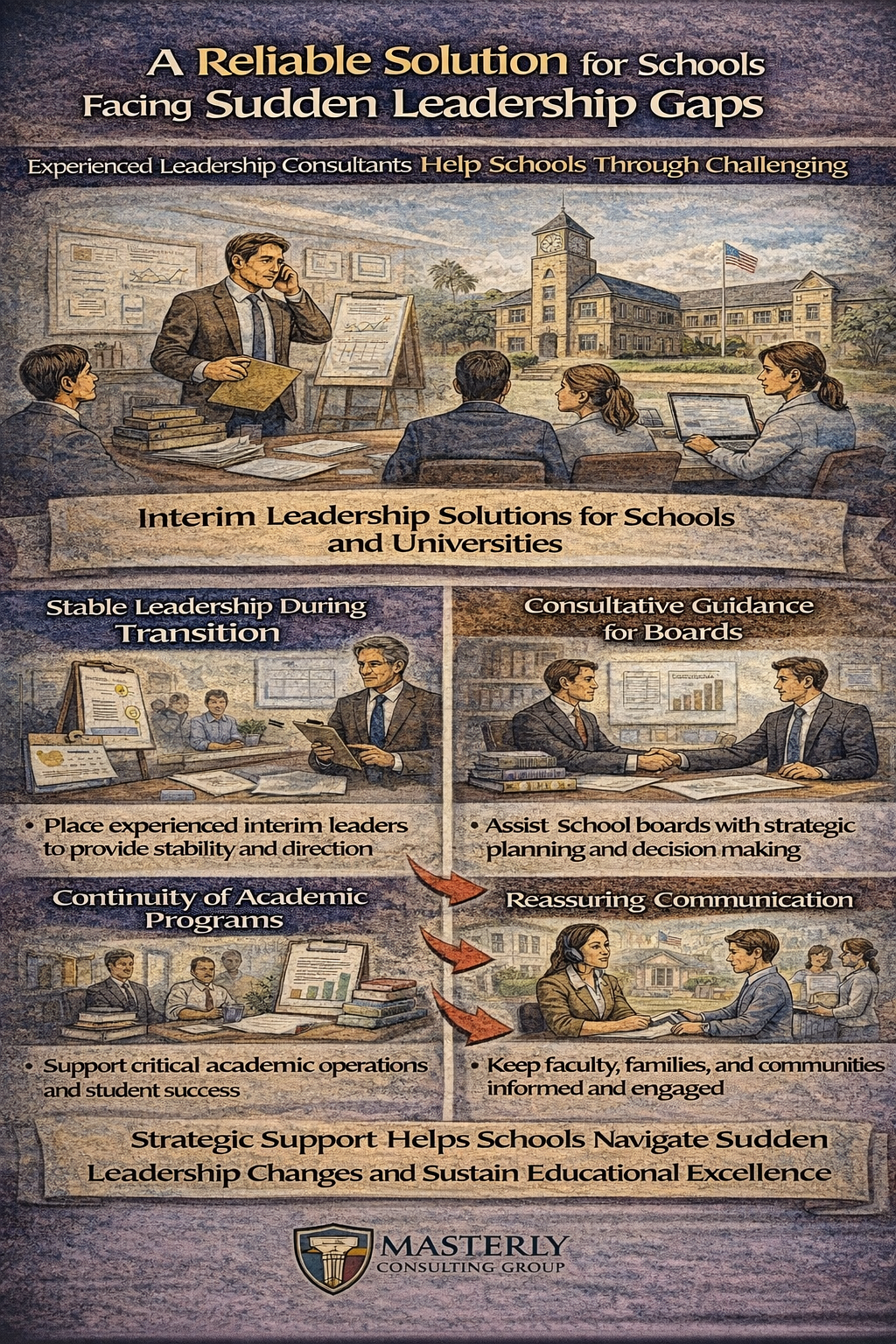
Consultants who specialize in education consulting services help guide institutions during these complex periods. Their role is not to replace leadership permanently, but to provide experienced perspective and practical solutions while the organization prepares its next steps. With the right support, schools can stabilize operations and maintain confidence across the campus.
This assistance allows academic leaders to remain focused on what matters most—supporting students and protecting the institution’s mission.
The Role of Strategic Support in Education
During a leadership transition, institutions benefit from advisors who understand the field of education deeply. Experienced consultants bring expertise developed through many years working with schools, colleges, and universities. Their insights allow institutions to address immediate concerns while planning for the long-term future.
Consultants often work closely with leadership teams, faculty members, and board members to identify priorities. Through collaboration and analysis, they help administrators understand the institution’s current position and determine the best path forward.
This approach creates a stable environment where decisions can be made thoughtfully rather than reactively.
Supporting Higher Education During Leadership Gaps
In higher education, leadership changes can have wide-ranging consequences. Academic departments depend on consistent guidance to maintain program quality and accreditation standards. Without direction, initiatives related to research, enrollment, and student development may lose momentum.
Universities often rely on experienced consultants to ensure continuity during these transitions. Advisors bring knowledge about higher education governance, institutional planning, and administrative operations. Their presence allows universities to continue functioning smoothly while leadership searches are underway.
By providing strategic direction, consultants help institutions maintain their commitment to student success and academic excellence.
Helping Schools Maintain Focus on Students
One of the greatest risks during leadership transitions is losing sight of the institution’s central mission—supporting students. When administrators are overwhelmed with operational concerns, programs designed to enhance learning outcomes may receive less attention.
Advisors help schools maintain a clear focus on student success. They evaluate academic initiatives, provide guidance for faculty members, and ensure that student support systems remain effective.
Through thoughtful planning, institutions can continue to serve their students even during periods of change.
How Consulting Experts Help Institutions Navigate Challenges
Consulting experts bring a structured approach to leadership transitions. Their work often begins with listening—meeting with administrators, faculty members, and community stakeholders to understand institutional priorities.
From there, consultants conduct strategic research and institutional analysis. This process allows them to identify both immediate concerns and long-term opportunities for improvement.
The resulting recommendations often include:
- Leadership continuity strategies
- Academic program evaluations
- Communication frameworks for faculty and families
- Operational improvements that strengthen institutional stability
These steps help institutions move forward with confidence.
Transforming Challenges Into Opportunity
Leadership gaps can feel disruptive, but they also create space for reflection and improvement. Institutions often use these moments to explore new ideas, refine priorities, and rethink organizational structures.
Consultants assist schools in transforming challenges into meaningful progress. They help administrators identify areas where innovation and strategic change can strengthen the institution.
By viewing the transition as an opportunity, institutions can emerge stronger and better prepared for the future.
The Role of Technology and AI in Modern Education
Technology continues to reshape the landscape of education. From digital learning platforms to advanced analytics, new tools are helping institutions improve learning outcomes and operational efficiency.
Consultants often guide schools and universities in adopting AI solutions that support decision-making and academic planning. These technologies allow institutions to analyze enrollment trends, evaluate academic performance, and identify opportunities for improvement.
The thoughtful use of AI also helps administrators manage complex systems more efficiently. With the right tools, institutions gain better access to data that informs strategic decisions.
Strengthening Institutional Operations
Leadership transitions often reveal areas where institutional operations can improve. Consultants work with administrative teams to evaluate processes, communication systems, and resource allocation.
Through collaborative planning, institutions can create a stronger foundation for future growth. Advisors provide insights that help administrators streamline workflows and improve coordination across departments.
These improvements ensure that schools remain effective and responsive to the needs of students and faculty members.
Building Partnerships That Support Education
Consulting relationships often evolve into long-term partnerships. Institutions frequently choose to partner with advisors who understand their mission and institutional culture.
A trusted consulting partner helps schools implement strategic solutions and maintain momentum in key initiatives. This collaboration also provides administrators with ongoing guidance as they navigate complex decisions.
Through strong partnerships, institutions gain access to expertise that strengthens their leadership capacity.
Mentoring Leaders Within Educational Institutions
Developing internal leadership talent is another critical component of consulting engagements. Advisors often provide mentoring and advising programs that help emerging leaders grow into executive roles.
These initiatives help administrators build the confidence and capabilities needed to guide their institutions effectively. Mentoring programs also encourage collaboration and professional development across departments.
Over time, this leadership development strengthens the institution’s ability to navigate future challenges.
Supporting Families and Communities
Educational institutions do not operate in isolation. They exist within vibrant communities that include families, students, faculty members, and local organizations.
During leadership transitions, maintaining communication with these groups becomes especially important. Consultants help institutions develop strategies that keep the community informed and engaged.
Strong relationships with families and community partners reinforce trust and support the institution’s long-term mission.
Preparing Students for the Future
The ultimate goal of every institution is to prepare students for meaningful lives and careers. Leadership transitions should never compromise this mission.
Consultants help schools, colleges, and universities maintain programs that support learning, discovery, and innovation. Through careful planning, institutions can continue to guide students toward academic achievement and professional success.
This commitment ensures that every child and young adult receives the education needed to pursue their chosen path.
The Value of Experience in Education Consulting
Effective consulting requires deep experience in the field of education. Advisors who have spent many years working with academic institutions understand the challenges administrators face.
Their knowledge allows them to anticipate obstacles and provide practical solutions. Institutions benefit from this expertise as they navigate complex transitions and develop strategic plans for the future.
Experienced consultants also bring valuable insights from their work with colleges, universities, and educational organizations across the country.
Masterly Consulting Group: Supporting Schools Through Change
At Masterly Consulting Group, we understand the realities that schools, colleges, and universities face when leadership changes unexpectedly. Our team works closely with academic leaders to develop thoughtful strategies that protect institutional stability and support student success.
Our consultants bring extensive experience in higher education, offering practical guidance that helps institutions maintain momentum during challenging transitions. We work with clients to develop customized plans that strengthen leadership, improve operations, and create lasting results.
Our mission is to help educational institutions remain resilient, innovative, and focused on their academic goals.
Becoming a Global Leader in Modern Education Strategy
Educational institutions today aim to grow beyond local influence and become a global leader in learning, research, and innovation. Schools and universities that adapt quickly to change often position themselves as a global leader by investing in leadership development, strategic planning, and collaborative partnerships. When institutions receive expert guidance during leadership transitions, they gain the stability needed to strengthen academic programs and expand their influence. This forward-thinking approach helps schools remain competitive while continuing to serve students and communities effectively.
Strengthening Teaching During Leadership Transitions
Periods of administrative change should never disrupt the quality of teaching within a school or university. Faculty members continue their important work even when leadership roles shift, ensuring that students maintain consistent learning experiences. Strong guidance and institutional support help educators maintain effective teaching strategies while administrators reorganize leadership responsibilities. By protecting classroom instruction, institutions preserve the academic standards that students and families expect.
Using the Website as a Communication Hub
A well-designed website plays an important role during times of change within educational institutions. When leadership transitions occur, the website becomes a central place where schools communicate updates, share resources, and keep families informed. Institutions can highlight programs, academic initiatives, and student opportunities while reinforcing trust with their community. Maintaining an updated website helps schools remain transparent and accessible to stakeholders.
Balancing Educational Mission and Financial Profit
While education focuses primarily on learning and development, institutions must still manage financial sustainability. Strategic planning allows schools to balance their mission with responsible financial practices, including maintaining enough profit or revenue to support operations and future growth. When leadership teams approach financial decisions carefully, the institution can reinvest resources into academic programs, student services, and campus development. Responsible financial planning ensures that education continues to thrive even during periods of leadership transition.
Using Video to Connect With Students and Communities
Digital communication tools have become essential in modern education, and video is one of the most powerful ways institutions connect with their audiences. Schools often use video messages to update students, families, and faculty members during leadership changes or major announcements. These videos can introduce interim leaders, highlight academic programs, or explain institutional initiatives. Clear and engaging communication helps maintain trust and transparency across the entire educational community.
Academic Events That Strengthen Institutional Culture
Academic events play an important role in maintaining a sense of unity during times of transition. Conferences, workshops, and campus events allow faculty members, administrators, and students to share ideas and celebrate academic achievements. These gatherings reinforce institutional identity and keep momentum moving forward. Even when leadership changes occur, events help maintain continuity and strengthen connections across the campus community.
Laying the Groundwork for Long-Term Institutional Stability
Successful institutions invest time in laying the groundwork for sustainable leadership and organizational growth. This groundwork often includes strategic planning, faculty collaboration, and the development of clear administrative structures. By establishing strong systems and communication channels, schools prepare themselves for future leadership transitions. Effective groundwork ensures that institutions remain stable and resilient regardless of unexpected changes.
Helping Institutions Discover New Opportunities
Leadership transitions often create space for institutions to discover new opportunities for improvement. Schools and universities may discover innovative approaches to academic programming, student engagement, or operational efficiency during these periods of reflection. Consultants and advisors help leaders evaluate these opportunities and turn them into practical strategies. This process allows institutions to move forward with renewed purpose and clarity.
The Ability to Pivot in a Changing Educational Landscape
Modern education requires institutions to remain flexible and ready to pivot when circumstances change. Whether responding to technological innovation, enrollment shifts, or policy adjustments, schools must sometimes pivot their strategies quickly. Institutions that embrace adaptability often maintain stronger leadership and operational resilience. This ability to pivot allows schools to remain responsive to the evolving needs of students and communities.
Expanding Institutional Reach Through Strategic Leadership
Strong leadership helps educational institutions expand their influence and reach new communities. Through partnerships, research initiatives, and academic collaboration, schools can extend their reach far beyond their immediate location. When institutions maintain clear strategy and effective leadership, they attract students, faculty members, and partners from diverse backgrounds. Expanding institutional reach strengthens both academic reputation and long-term impact.
Contact Masterly Consulting Group for Education Consulting Services
Leadership transitions can be difficult, but they do not have to derail your institution’s progress. With the right guidance, schools, colleges, and universities can navigate change while continuing to support students, faculty members, and the broader community.
Masterly Consulting Group provides experienced education consulting services designed to help institutions stabilize leadership, strengthen strategy, and prepare for the future. Our experts work closely with clients to identify opportunities, build effective plans, and implement solutions that support long-term success.
If your institution is facing leadership challenges or planning for organizational change, our team is ready to help.
Contact Masterly Consulting Group today at (888) 209-4055 to schedule a free consultation and learn how our expertise can support your institution’s success.