College Sports Consulting Services Designed to Protect Athletic Departments
Athletic Departments Are Operating in a New Era
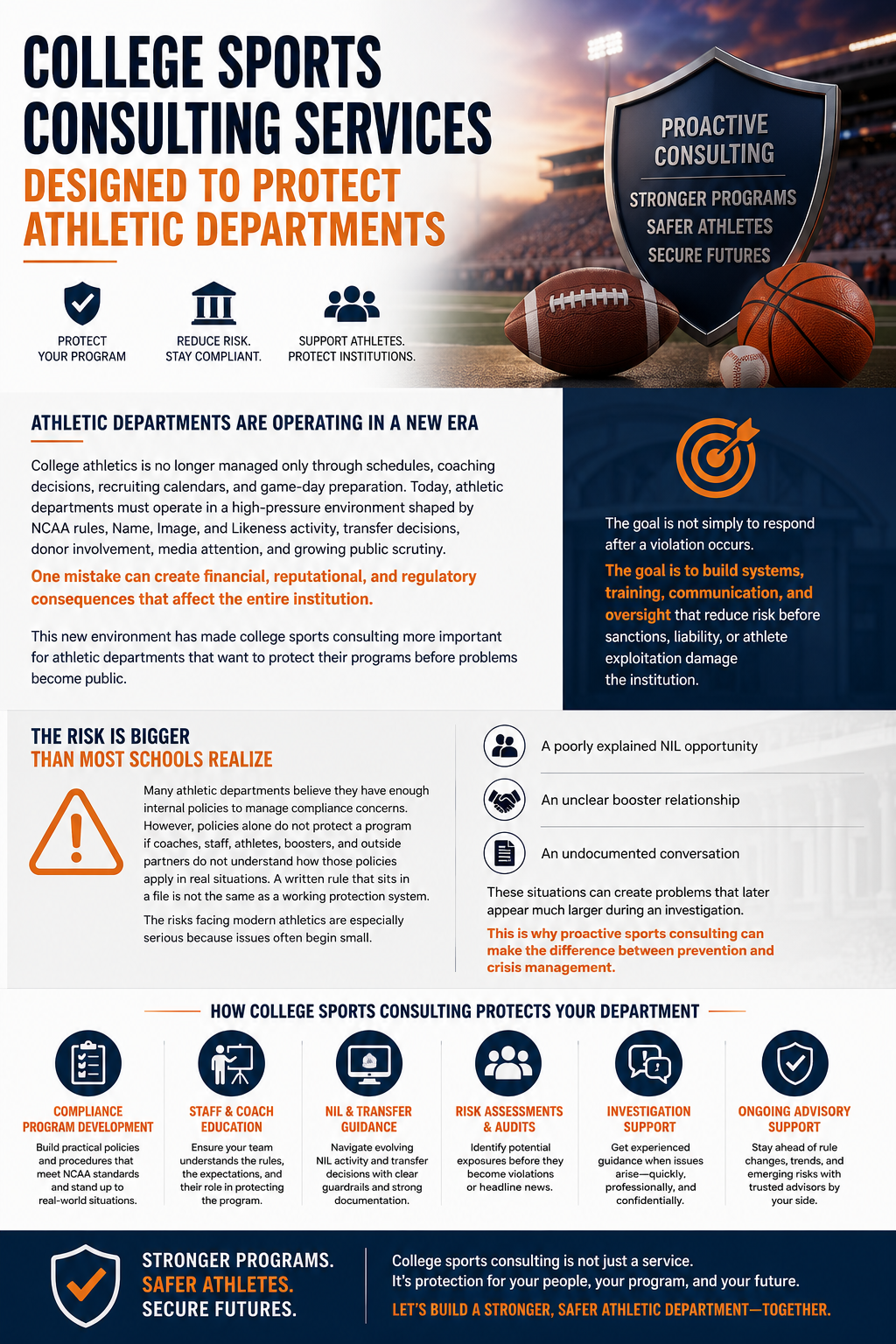
College athletics is no longer managed only through schedules, coaching decisions, recruiting calendars, and game-day preparation. Today, athletic departments must operate in a high-pressure environment shaped by NCAA rules, Name, Image, and Likeness activity, transfer decisions, donor involvement, media attention, and growing public scrutiny. One mistake can create financial, reputational, and regulatory consequences that affect the entire institution.
This new environment has made college sports consulting more important for athletic departments that want to protect their programs before problems become public. The goal is not simply to respond after a violation occurs. The goal is to build systems, training, communication, and oversight that reduce risk before sanctions, liability, or athlete exploitation damage the institution.
The Risk Is Bigger Than Most Schools Realize
Many athletic departments believe they have enough internal policies to manage compliance concerns. However, policies alone do not protect a program if coaches, staff, athletes, boosters, and outside partners do not understand how those policies apply in real situations. A written rule that sits in a file is not the same as a working protection system.
The risks facing modern athletics are especially serious because issues often begin small. A poorly explained NIL opportunity, an unclear booster relationship, or an undocumented conversation can create problems that later appear much larger during an investigation. This is why proactive sports consulting can make the difference between prevention and crisis management.
NCAA Sanctions Can Start with Simple Oversights
NCAA sanctions are not always caused by intentional misconduct. In many situations, violations develop because someone misunderstood a rule, failed to document a decision, or assumed another department was handling the issue. These mistakes can become costly when regulators, media outlets, or internal stakeholders begin asking questions.
Athletic departments need clear procedures that help everyone understand their responsibilities. A strong strategy should include education, reporting channels, recordkeeping, internal reviews, and leadership accountability. When those systems are missing, the institution may not recognize danger until the damage has already begun.
Name, Image, and Likeness Has Changed the Compliance Landscape
Name, Image, and Likeness has created new opportunities for athletes, but it has also introduced major risks for universities and athletic departments. Athletes may receive offers from sponsors, collectives, local businesses, agents, or online platforms without fully understanding the legal, financial, or eligibility consequences. Staff members may also be unsure about what they can say, promote, approve, or monitor.
The Masterly Consulting Group provides guidance designed to help educational entities train athletes and staff before NIL activity creates exposure. This type of consulting helps schools reduce confusion, prevent exploitation, and build a safer environment for student-athletes. Without proper education, NIL can quickly become a source of liability instead of opportunity.
Protecting Athletes Must Be Part of the Plan
Athletic departments have a responsibility to help athletes understand the risks connected to contracts, endorsements, taxes, social media promotions, and outside representation. Young athletes may be talented, visible, and marketable, but many are not prepared to evaluate business opportunities on their own. This creates room for exploitation, bad contracts, and long-term financial harm.
A strong college sports consulting plan should include athlete education that is easy to understand and practical. Athletes need to know when to ask questions, how to recognize red flags, and how to protect their own interests. When schools provide meaningful training, they show recruits, parents, and stakeholders that athlete protection is a priority.
Staff Training Reduces Institutional Exposure
Coaches, compliance staff, administrators, and support personnel often interact with athletes during important decision-making moments. If staff members do not understand NIL boundaries or NCAA expectations, they may unintentionally create risk for the institution. Even casual conversations can become important if questions arise later.
Training should not be limited to a one-time presentation. Athletic departments need ongoing education that reflects changing rules, real examples, and practical decision-making scenarios. This is where sports consulting can support schools by creating structured training that helps staff recognize problems before they escalate.
College Sports Consulting Is a Preventive Tool
The best time to seek guidance is before an investigation, complaint, media inquiry, or internal dispute. Too often, athletic departments wait until pressure builds before bringing in outside help. By that point, options may be limited and the institution may already be exposed.
Effective sports consulting is designed to identify weak points early. Consultants can review policies, assess communication gaps, evaluate NIL procedures, and recommend stronger systems. This preventive approach helps athletic departments protect athletes, coaches, leadership, and the institution’s reputation.
Consulting Firms Can Provide Outside Perspective
Internal teams work hard, but they may be too close to daily operations to see every risk clearly. Outside consulting firms can provide an independent view of what is working, what is missing, and what needs immediate attention. This perspective is valuable because athletic departments often operate across many moving parts at once.
The right consultant can help identify areas where leadership, compliance, operations, and athlete education are not fully aligned. When these gaps remain unresolved, they can create serious problems later. Independent review gives schools a chance to correct weaknesses before they become public issues.
The Role of Leadership in Athletic Department Protection
Strong leadership sets the tone for compliance, athlete protection, and responsible decision-making. If leadership treats NIL and NCAA compliance as routine paperwork, the rest of the department may do the same. If leadership treats risk prevention as a core responsibility, the culture begins to change.
Athletic directors, university officials, and senior administrators should ensure that every team member understands the importance of compliance. This includes coaches, staff, athletes, donors, and outside partners. Clear leadership helps prevent confusion and creates accountability across the department.
A Strong Compliance Culture Requires More Than Rules
A compliance culture is not built by handing out policies and hoping people read them. It is built through training, communication, follow-up, and consistent expectations. Athletic departments must make compliance part of everyday decision-making.
This is especially important in collegiate athletics, where pressure to win, recruit, raise money, and maintain public visibility can influence behavior. A practical strategy helps staff understand that prevention protects everyone involved. When compliance becomes part of the culture, athletic departments are better positioned to avoid sanctions.
NIL Education Should Be Practical and Clear
NIL rules can feel overwhelming, especially for athletes and staff who are not trained in legal or business issues. Educational programs should avoid unnecessary complexity and focus on real situations athletes may face. This includes sponsorship offers, social media posts, appearances, merchandise deals, and third-party contacts.
The Masterly Consulting Group helps educational entities create training that makes sense to the people who need it most. Effective service should help athletes and staff understand what to do, what to avoid, and when to ask for guidance. Clear education reduces confusion and creates stronger protection for the institution.
Athletic Departments Need Stronger Documentation
Documentation is often overlooked until a problem arises. When questions are asked months later, athletic departments need records that explain what happened, who was involved, and what steps were taken. Without documentation, even appropriate actions may become difficult to defend.
A consultant can help athletic departments develop documentation practices that support compliance and accountability. This may include NIL disclosure records, staff training logs, policy acknowledgments, communication protocols, and review procedures. Strong records can help show that the institution took reasonable steps to prevent problems.
Booster and Partner Activity Requires Careful Oversight
Boosters, sponsors, collectives, and community partners can create valuable opportunities for athletes and programs. However, they can also create risk if their activity is not properly understood or monitored. Athletic departments cannot afford to ignore outside influence in the NIL era.
A strong sports consulting plan should address how external relationships are managed. This includes identifying who communicates with athletes, how opportunities are reviewed, and how concerns are reported. Proper oversight helps protect both the institution and the athletes it serves.
Recruiting Risks Have Become More Complicated
Recruiting has always carried compliance concerns, but NIL has changed the conversation. Prospective athletes and families may ask questions about earning opportunities, collectives, sponsorships, and local market potential. Staff must know how to respond without creating NCAA exposure.
Athletic departments need clear training on recruiting communications. A practical strategy can help coaches and staff understand boundaries while still communicating effectively with recruits. Without this guidance, recruiting conversations can create unnecessary risk.
Media Attention Can Escalate Problems Quickly
In the modern sports environment, a compliance concern can become public before an institution has fully reviewed the facts. Social platforms, local reporters, national outlets, and online commentators can spread allegations quickly. Even an unproven concern can damage trust.
Athletic departments need systems that help them respond carefully and professionally. This includes internal reporting, leadership coordination, and communication planning. Strong preparation can help prevent confusion when pressure increases.
Data Can Reveal Compliance Weaknesses
Athletic departments often have more information available than they realize. NIL disclosures, training attendance, recruiting records, athlete questions, and incident reports can show patterns over time. If this information is not reviewed, warning signs may be missed.
Data analysis can help leadership identify trends before they become bigger issues. For example, repeated questions about the same NIL topic may reveal a training gap. Using data effectively helps athletic departments make better decisions and improve prevention efforts.
Business Operations and Compliance Are Connected
Athletic departments are not only competitive programs; they are also complex organizations with budgets, staff, vendors, facilities, partnerships, and public expectations. When business operations are disconnected from compliance, risk can increase. Every decision involving revenue, sponsorship, athlete activity, or public promotion should be evaluated carefully.
This is where management consulting principles can strengthen athletic department protection. By reviewing workflow, accountability, communication, and oversight, schools can reduce operational gaps that create compliance exposure. Strong operations help support strong compliance.
Sports Management Requires a Broader View
Modern sports management requires leaders to think beyond wins and losses. Athletic departments must consider compliance, athlete welfare, revenue generation, public perception, and long-term institutional risk. These responsibilities require planning, not guesswork.
A qualified consultant can help athletic departments connect daily decisions to broader institutional goals. This helps leaders avoid isolated decision-making that may create problems later. The right guidance can support both competitive success and responsible governance.
The Cost of Waiting Can Be Significant
Waiting until a complaint, investigation, or public controversy occurs can make every issue harder to manage. By then, athletic departments may need to address missing records, inconsistent communication, confused staff, or damaged relationships. These problems are far easier to prevent than repair.
The urgency is real because NIL and NCAA compliance are moving quickly. Athletic departments that delay may discover that their policies are already outdated or incomplete. Proactive consulting helps institutions take control before outside pressure forces action.
Athletic Departments Face More Scrutiny Than Ever Before
The environment surrounding college athletics continues to evolve. Universities must balance competitive success with compliance obligations, athlete welfare, donor expectations, and institutional accountability. Every decision made by an athletic department may eventually be reviewed by regulators, administrators, the media, or the public.
This growing scrutiny has increased demand for sports consulting among institutions seeking proactive solutions. Rather than reacting to problems after they occur, schools are investing in systems that help identify risks early and create stronger safeguards.
Consulting Firms Bring Specialized Experience
Many athletic departments have talented internal staff, but few possess dedicated expertise in every area of NCAA compliance, NIL governance, risk management, and organizational oversight. This is one reason why experienced consulting firms have become valuable resources for educational institutions.
Outside advisors can evaluate existing policies, identify vulnerabilities, and recommend practical improvements. Their objective perspective often uncovers issues that internal personnel may overlook because of competing responsibilities.
A knowledgeable consultant provides guidance based on experience working with multiple institutions, helping departments learn from industry trends and emerging best practices.
College Athletics Requires Strategic Planning
Successful programs understand that compliance is not separate from performance. Strong governance often contributes directly to stability, recruiting confidence, and long-term institutional success.
Within collegiate athletics, a proactive strategy should address athlete education, NIL oversight, documentation standards, reporting procedures, and leadership accountability. When these elements work together, athletic departments are better positioned to avoid unnecessary risk.
Strategic planning also creates consistency across departments, reducing confusion and supporting stronger decision-making.
Sports Consulting Helps Identify Hidden Risks
Many compliance issues begin as small operational concerns that receive little attention. Over time, these concerns may expand into larger problems if left unresolved.
Effective sports consulting includes assessments designed to uncover hidden vulnerabilities. These reviews often examine communication channels, staff responsibilities, athlete education programs, and institutional policies.
By identifying concerns early, athletic departments can implement corrective measures before regulators, media outlets, or other stakeholders become involved.
The Role of Data in Risk Prevention
Athletic departments generate enormous amounts of information every day. Recruiting records, training documentation, NIL disclosures, compliance reports, and communication logs all provide valuable insight.
Through data analysis, institutions can identify patterns that may indicate emerging risks. Repeated compliance questions, inconsistent reporting practices, or gaps in athlete education may reveal opportunities for improvement.
Using data effectively allows leaders to make informed decisions rather than relying on assumptions. This approach supports stronger governance and improved outcomes.
Leadership Accountability Protects Institutions
Strong leadership remains one of the most important factors in reducing institutional risk. Athletic directors, compliance officers, university administrators, and coaching staffs all influence the culture of a department.
When leaders demonstrate commitment to compliance and athlete protection, those priorities become embedded throughout the organization. Staff members are more likely to follow procedures when they see leadership actively supporting those efforts.
A culture of accountability creates consistency and reduces the likelihood of misunderstandings.
The Importance of Training Programs
Training should never be viewed as a one-time event. Regulations change, NIL opportunities evolve, and new personnel join athletic departments every year.
Comprehensive training programs help coaches, staff, and athletes understand their responsibilities. They also create opportunities to address questions before mistakes occur.
Athletic departments that invest in ongoing education often experience fewer compliance concerns and stronger institutional confidence.
NIL Policies Need Regular Review
Policies that were effective a year ago may no longer address today's NIL environment. Rules continue to evolve, and institutions must adapt accordingly.
A qualified consultant can help departments review and update policies to reflect current realities. This process ensures that guidance remains relevant and practical.
Regular reviews also demonstrate a commitment to continuous improvement and responsible oversight.
Managing Relationships with External Partners
Athletic departments frequently work with sponsors, collectives, businesses, and community partners. These relationships can create tremendous opportunities for athletes and institutions alike.
However, they can also introduce risk if expectations are unclear or oversight is lacking. Proper management requires communication, documentation, and ongoing review.
Strong relationship management helps protect both athletes and institutions while supporting long-term success.
Sports Marketing and NIL Opportunities
The growth of NIL has increased interest in sports marketing among student-athletes. Athletes are now exploring sponsorship agreements, endorsements, appearances, and promotional opportunities that were previously unavailable.
Educational institutions should ensure athletes understand both the opportunities and responsibilities associated with these activities. Proper guidance can help prevent misunderstandings and poor decision-making.
Athletes who receive quality education are often better equipped to evaluate opportunities responsibly.
Building Effective Partnerships
Successful athletic departments recognize the value of strong partnerships. These relationships may include educational entities, compliance professionals, legal advisors, community organizations, and outside consultants.
The right partnerships create access to specialized knowledge and additional resources. They also provide valuable support during periods of change or uncertainty.
Strong collaboration often leads to stronger outcomes for both athletes and institutions.
The Connection Between Compliance and Business Success
Athletic departments operate within a broader business environment that includes budgeting, fundraising, sponsorships, branding, and community engagement. Compliance failures can negatively impact each of these areas.
A proactive business strategy helps ensure that operational goals align with regulatory expectations. This reduces risk while supporting sustainable growth.
Organizations that view compliance as part of overall institutional success often achieve stronger long-term results.
Sports Industry Changes Continue to Accelerate
The modern sports industry moves quickly. NIL developments, legislative proposals, technology advancements, and evolving NCAA policies create constant change.
Athletic departments must remain adaptable to protect themselves effectively. Waiting until a new challenge emerges may leave institutions unprepared.
This reality makes proactive consulting more valuable than ever.
Technology Is Reshaping Compliance Efforts
Advances in technology are creating new opportunities for monitoring, education, reporting, and documentation. Athletic departments can use digital tools to improve efficiency and strengthen oversight.
Technology also helps institutions manage increasing amounts of information more effectively. Proper implementation supports transparency and accountability.
When combined with strong policies and leadership, technology becomes a powerful risk-management tool.
Media Exposure Increases Institutional Risk
Today's media landscape creates both opportunities and challenges for athletic departments. Positive coverage can enhance reputation, while negative attention can spread rapidly.
Even minor concerns may become major stories if institutions are not prepared to respond appropriately. This makes planning and communication especially important.
Departments that invest in preventive measures are often better positioned to manage public scrutiny.
Sports Business Conferences Highlight Emerging Trends
Many leaders attend sports business conferences to stay informed about industry developments, NIL changes, and compliance challenges. These events provide valuable opportunities to learn from experts and peers.
However, information alone is not enough. Athletic departments must translate knowledge into practical action.
Consultants can help institutions implement lessons learned and adapt them to their unique circumstances.
Global Sports Trends Influence College Athletics
Changes occurring throughout global sports often influence college athletics as well. Athlete branding, sponsorship models, digital engagement, and revenue opportunities continue to evolve across the world.
Athletic departments should monitor these developments to better understand future challenges and opportunities.
Awareness of broader trends helps institutions remain proactive rather than reactive.
Consulting Services Support Long-Term Stability
Effective consulting services focus on long-term protection rather than short-term fixes. They help institutions strengthen policies, improve education, enhance oversight, and build stronger organizational cultures.
The goal is not simply avoiding sanctions. The goal is creating sustainable systems that support athletes, staff, and institutional objectives.
Departments that invest in prevention often reduce future costs and disruptions.
The Value of Independent Research
Strong decision-making requires reliable information. Quality research helps athletic departments understand emerging trends, identify risk factors, and evaluate potential solutions.
Many organizations benefit from working with consultants who maintain a dedicated research team focused on developments affecting college athletics.
This knowledge helps institutions make informed choices in an increasingly complex environment.
Protecting the Future of Athletic Programs
Every athletic department wants to provide opportunities for athletes while maintaining institutional integrity. Achieving both goals requires preparation, planning, and continuous improvement.
The future of college athletics will likely involve additional regulatory changes, increased scrutiny, and new NIL considerations. Institutions that prepare today will be better positioned for tomorrow.
Protecting athletic programs requires more than good intentions. It requires a thoughtful and proactive strategy supported by experienced professionals.
Preparing for NCAA Investigations Before They Happen
Many athletic departments mistakenly believe NCAA investigations are rare events that happen only to major programs. In reality, inquiries can begin with a complaint, a misunderstanding, an athlete concern, a booster issue, or information shared through the media. Once questions are raised, institutions must be prepared to demonstrate that they exercised reasonable oversight.
A proactive consultant can help athletic departments create response plans before problems arise. Preparation often includes documentation procedures, reporting protocols, communication strategies, and leadership responsibilities. These measures can significantly improve an institution's ability to navigate difficult situations.
Operational Improvement Creates Stronger Protection
One of the most overlooked aspects of compliance is operational improvement. Athletic departments frequently focus on policies while overlooking workflow challenges that create unnecessary risk.
Improving communication channels, approval processes, reporting structures, and oversight procedures can reduce exposure across multiple areas. Strong operations often create stronger compliance outcomes.
When institutions align daily responsibilities with long-term objectives, risk management becomes more effective and sustainable.
Commercial Strategy and NIL Oversight
Athletic departments increasingly operate within an environment influenced by sponsorship opportunities, athlete branding, and commercial relationships. A thoughtful commercial strategy helps schools manage these activities responsibly while protecting athletes and institutional interests.
Without proper planning, commercial opportunities can create confusion regarding responsibilities, expectations, and compliance obligations. A structured approach helps prevent misunderstandings.
Athletic departments that establish clear processes often experience better outcomes for both athletes and the institution.
Sponsorship Opportunities Require Oversight
Modern athletics involves increasing levels of sponsorship activity. Athletes, departments, and outside organizations frequently explore opportunities that create value for all parties involved.
However, sponsorship arrangements should be evaluated carefully. Schools need procedures that help identify potential conflicts and compliance concerns before agreements move forward.
An effective sponsorship strategy can help athletic departments support athletes while reducing institutional exposure.
Fan Engagement and Institutional Reputation
Strong fan engagement helps build loyalty, increase attendance, and strengthen support for athletic programs. However, athletic departments must balance engagement efforts with compliance obligations and institutional values.
Programs that communicate effectively with sports fans often create stronger community relationships. These relationships can support fundraising, recruiting, and long-term program development.
A thoughtful engagement approach helps institutions strengthen trust while maintaining accountability.
Sports Teams Depend on Strong Governance
Successful sports teams are often supported by strong administrative structures behind the scenes. Coaches and athletes may receive the most public attention, but compliance personnel, administrators, and support staff play critical roles.
Governance systems help ensure decisions are made consistently and responsibly. Without those systems, athletic departments may become vulnerable to preventable mistakes.
Strong governance is a competitive advantage that protects programs over time.
Data-Driven Decision Making Matters
The most effective athletic departments increasingly rely on data rather than assumptions. Information gathered from athlete education programs, compliance reviews, NIL disclosures, and operational assessments can reveal valuable insights.
Through ongoing data analysis, institutions can identify trends, measure effectiveness, and improve performance. Better information leads to better decisions.
A data-driven approach helps athletic departments remain proactive in a rapidly changing environment.
Building Strong Relationships with Internal Stakeholders
Compliance is not the responsibility of one office or one individual. Success requires cooperation among coaches, administrators, faculty, legal counsel, and other internal stakeholders.
When communication breaks down, risk often increases. Athletic departments should create systems that encourage collaboration and accountability.
A unified approach strengthens oversight and improves institutional effectiveness.
Thought Leadership Helps Departments Stay Ahead
The regulatory environment affecting athletics continues to evolve. Institutions that embrace thought leadership are often better positioned to identify emerging challenges and opportunities.
Thought leadership involves staying informed, participating in industry discussions, and learning from evolving best practices. This mindset encourages continuous improvement.
Athletic departments that remain engaged are more likely to anticipate changes rather than react to them.
Understanding the Broader Sports Industry
College athletics does not exist in isolation. Trends throughout the broader sports industry often influence recruiting, NIL activity, athlete branding, and commercial opportunities.
Developments involving sports leagues, professional organizations, and global sports organizations frequently shape expectations within collegiate athletics. Understanding these trends helps institutions prepare for future challenges.
Awareness creates opportunities for better planning and stronger decision-making.
Sports Consulting Supports Business Development
Athletic departments increasingly function as complex organizations that require strategic planning and growth management. Effective sports consulting can support business development efforts while helping institutions remain compliant.
Growth initiatives should always be evaluated through both operational and compliance lenses. This balanced approach helps reduce risk while supporting institutional objectives.
Responsible growth protects both athletes and universities.
Partnerships Create Opportunities and Risks
Strong partnerships can expand opportunities for athletes, departments, and institutions. Community organizations, sponsors, educational partners, and businesses often contribute valuable resources and support.
However, every relationship should be managed carefully. Expectations, communication procedures, and oversight responsibilities should be clearly defined.
Properly managed partnerships help create value while minimizing exposure.
The Role of Experience and Expertise
Not all advisors bring the same level of expertise. Athletic departments should seek professionals who possess a deep understanding of collegiate athletics, NIL developments, compliance expectations, and institutional operations.
Experienced consultants often identify issues more quickly because they have seen similar challenges before. Their knowledge helps schools avoid costly mistakes.
Expert guidance can provide confidence during periods of uncertainty.
What Athletic Departments Should Look for in a Consultant
Selecting the right consultant is an important decision. Institutions should evaluate qualifications, industry knowledge, communication skills, and practical experience.
A strong consultant serves as a trusted advisor, educator, and problem-solver. They should be able to translate complex issues into actionable recommendations.
Athletic departments benefit most from advisors who understand both compliance and operational realities.
The Masterly Consulting Group Difference
The Masterly Consulting Group understands that athletic departments face unprecedented challenges. NIL developments, recruiting concerns, athlete protection issues, compliance obligations, and increasing public scrutiny require more than generic advice.
Our college sports consulting services are designed specifically to help educational institutions identify risks, strengthen policies, improve oversight, and educate athletes and staff. We work closely with clients to create customized solutions that address their unique circumstances.
Rather than waiting for problems to become investigations, we help institutions take proactive steps that support long-term success.
Education Remains the Strongest Defense
Many compliance issues occur because someone simply did not understand the rules or the consequences of a decision. Education remains one of the most effective tools available to athletic departments.
The Masterly Consulting Group provides training programs designed to help athletes, coaches, administrators, and staff understand their responsibilities. This education helps reduce confusion while strengthening accountability.
Well-informed organizations are better equipped to prevent sanctions, liability, and exploitation.
Protecting Athletes in the NIL Era
Athletes face opportunities that previous generations never experienced. While these opportunities can create tremendous value, they can also expose student-athletes to unnecessary risk.
Our team helps institutions educate athletes about contracts, branding, endorsements, financial considerations, and responsible decision-making. Protecting athletes requires preparation and guidance.
Athletic departments that prioritize athlete education demonstrate leadership and commitment to student success.
Taking Action Before Problems Escalate
The cost of waiting is often much higher than the cost of prevention. Athletic departments that delay action may discover weaknesses only after regulators, media outlets, or other stakeholders begin asking difficult questions.
Proactive sports consulting helps institutions address concerns before they become public issues. Prevention protects reputations, budgets, relationships, and athletic opportunities.
The strongest programs are often the ones that prepare before they are forced to respond.
How Sport Consulting Firms Help Athletic Departments Stay Ahead of Emerging Risks
Many sport consulting firms focus on solving problems after they occur, but the most effective advisors help athletic departments identify risks before they become compliance issues. Through policy reviews, training programs, and strategic assessments, these firms help institutions strengthen oversight, reduce liability, and better protect athletes in a rapidly changing collegiate environment.
Brand Partnerships Require Careful Planning and Oversight
Successful brand partnerships can create valuable opportunities for athletes and athletic departments, but they also require proper review and compliance safeguards. Institutions that establish clear guidelines for sponsorship and promotional activities are better positioned to protect both their athletes and their reputation while maximizing NIL opportunities.
Lessons Athletic Departments Can Learn from Leading Firms
Many of the leading firms serving the athletics sector emphasize proactive planning, continuous education, and risk prevention. Athletic departments that adopt a similar mindset are often better prepared to address compliance challenges before they become significant institutional concerns.
Exceptional Customer Service Strengthens Long-Term Relationships
Providing exceptional customer service is important not only for businesses but also for athletic departments working with athletes, families, donors, and community stakeholders. Strong communication and responsiveness help build trust, improve relationships, and support a positive organizational culture.
Understanding the Connection Between Athletics and Investment Banking
The growing commercialization of college athletics has created increased interaction with professionals from fields such as investment banking, financial management, and business advisory services. Athletic leaders should understand how these relationships may influence sponsorship opportunities, facility projects, and long-term strategic planning.
Compliance Policies Should Reflect Protected Veteran Status Requirements
Educational institutions should ensure that employment and organizational policies recognize important protections, including those related to protected veteran status. Comprehensive policies help institutions maintain compliance while supporting fairness and accountability.
Building a Culture Consistent with Equal Opportunity Employer Principles
Athletic departments benefit from operating in a manner consistent with equal opportunity employer principles. Creating an inclusive environment helps strengthen organizational culture, supports recruitment efforts, and demonstrates a commitment to ethical leadership.
The Executive Director's Role in Athletic Department Oversight
An executive director often plays a critical role in coordinating initiatives, managing resources, and supporting institutional objectives. Strong leadership at every level helps ensure athletic departments remain aligned with compliance expectations and strategic goals.
Premium Seating Programs Can Create New Compliance Considerations
Revenue opportunities such as premium seating programs can support athletic department growth, but they should be managed carefully. Institutions should ensure that fundraising and donor benefits remain consistent with applicable policies and regulations.
Fan Experience Influences Long-Term Program Support
A positive fan experience can strengthen attendance, donor engagement, and community support. Athletic departments that focus on both compliance and engagement are often better positioned to build lasting relationships with supporters.
The Vice President's Responsibility in Athletic Governance
A university vice president may play an important role in overseeing athletic department operations, risk management, and institutional accountability. Strong collaboration between athletic leadership and university administration helps create a more effective compliance framework.
Establishing a Primary Liaison for Compliance Communication
Designating a primary liaison can improve communication between departments, coaches, athletes, and university leadership. Clear communication channels help reduce misunderstandings and support more consistent decision-making.
Exploring Different Consulting Roles Within Athletics
Various consulting roles exist within collegiate athletics, including compliance advisors, NIL specialists, operational consultants, and risk management professionals. Each role contributes unique expertise that can help institutions strengthen oversight and improve performance.
Investing Paid Time in Training Can Reduce Future Risk
Allocating paid time for compliance education and NIL training demonstrates a commitment to prevention. Athletic departments that invest in ongoing education often experience fewer misunderstandings and stronger institutional protection.
Identifying the Ideal Candidate for Leadership Positions
Selecting the ideal candidate for athletic leadership positions requires evaluating experience, communication skills, judgment, and commitment to compliance. Strong hiring decisions often influence organizational culture for years to come.
Finance Considerations Extend Beyond Athletic Budgets
Effective finance management includes evaluating NIL opportunities, sponsorship arrangements, donor relationships, and long-term institutional planning. Financial oversight remains an important component of athletic department governance.
Every Company Working with Athletes Should Understand Compliance Risks
Any company seeking to engage with college athletes through sponsorships, endorsements, or promotional agreements should understand applicable regulations. Clear expectations help reduce confusion and protect all parties involved.
Sports and Entertainment Continue to Converge
The relationship between athletics and entertainment has grown significantly in recent years. As athletes build personal brands and engage with audiences through digital platforms, institutions must balance opportunity with responsible oversight.
Building a Career in Athletic Leadership Requires Continuous Learning
A successful career in collegiate athletics requires ongoing education, adaptability, and a commitment to ethical decision-making. Leaders who remain informed about regulatory changes are often better equipped to guide their organizations effectively.
Retail Opportunities Create New NIL Possibilities
The expansion of athlete branding has created new opportunities in retail, including merchandise sales, licensing agreements, and promotional partnerships. Athletic departments should educate athletes about these opportunities while helping them understand potential risks.
Sales Strategies Must Align with Institutional Values
Whether discussing sponsorships, fundraising, or ticket sales, athletic departments should ensure revenue-generating activities align with institutional goals and compliance expectations. Responsible growth protects both the organization and its athletes.
The Power of Prevention in College Athletics
The greatest power athletic departments possess is the ability to identify and address risks before they become major problems. Proactive planning, training, and consulting support can help institutions protect athletes, strengthen compliance efforts, and preserve their long-term reputation.
Speak with Masterly Consulting Group About College Sports Consulting
Athletic departments face growing pressure from NCAA regulations, NIL developments, athlete protection concerns, media scrutiny, and evolving expectations across college athletics. Waiting until a problem emerges can expose institutions to sanctions, liability, reputational harm, and unnecessary disruption.
Masterly Consulting Group provides college sports consulting services designed to help educational institutions strengthen compliance, educate athletes and staff, improve oversight, and reduce risk before problems arise. Our team works with colleges, universities, athletic departments, and educational entities seeking practical solutions in an increasingly complex environment.
If your institution wants to better protect its athletes, coaches, leadership team, and overall athletic program, now is the time to act. Contact Masterly Consulting Group today at (888) 209-4055 for a free consultation. We will answer your questions, discuss your concerns, evaluate potential risks, and help your institution build a stronger foundation for long-term success before small issues become major challenges.