Board Retreat Facilitator: Turning Limited Meeting Time Into Clear Decisions and Accountability
Most board retreats end the same way: a full day of discussion, a few flip charts of ideas, and a sense of goodwill that fades by the next regular board meeting. The decisions never get assigned. The strategic priorities stay vague. Three months later, someone asks, "Didn't we already talk about this?"
A board retreat facilitator changes that outcome. This article explains what that role involves, when hiring one is the most effective way to spend your board's limited time, and how Masterly Consulting Group runs the process from first call to post-retreat follow up.
What a board retreat facilitator actually does (and why it matters now)
A board retreat facilitator is an outside, trained facilitator who designs and leads one- or two-day board retreats so that board members move beyond routine reports and committee updates into generative conversation, strategic planning, and binding decisions. The facilitator acts as an objective guide for strategic planning sessions, managing group dynamics, protecting time, and ensuring every session produces a clear outcome rather than open-ended discussion.
Board retreats should differ from regular board meetings in structure and intent. Where a standard board meeting covers operational updates, consent agenda items, and committee reports, a retreat focuses on team building, planning, and fundraising strategy. Board retreats aim to build action plans and improve collaboration across members who rarely get extended time together.
Consider two examples: a university board holding its annual governance workshop in March 2027 to set academic priorities for a three-year cycle, or a regional health nonprofit convening a fall 2026 board strategy session before a capital campaign decision. In each case, a full day of facilitated work replaces months of fragmented conversation.
The core value is straightforward. A skilled facilitator turns limited retreat time into three to five clear decisions, prioritized initiatives, and assigned accountability that move the organization forward. Masterly Consulting Group serves as the facilitator and guide for these high-stakes board retreats across associations, nonprofits, universities, and executive leadership teams.
When your board needs a retreat facilitator instead of another long meeting
Not every governance challenge requires a retreat. But certain situations demand more than a longer agenda at your next meeting. If you are a board chair, executive director, or university president, this checklist can help you determine whether a retreat facilitator is overdue.
A board retreat facilitator adds the most value when:
- A new CEO or president needs alignment with board members on direction during their first year.
- The organization is approaching a major strategic planning cycle (e.g., 2027–2030) and needs retreat agenda design that sets up the planning process.
- Persistent tension or factions on the board spill into regular board meetings. Contentious board meetings can hinder organizational progress, and difficult discussions can derail retreats without proper facilitation.
- Large growth, merger, or capital campaign decisions are on the horizon.
- After a crisis (financial, reputational, leadership) where the board must reset roles and trust.
- Board members often struggle to participate fully when they are also expected to facilitate, creating a dual role that weakens both process and input.
By contrast, routine budget approvals, minor policy updates, or standard committee work can be handled in a regular board meeting or committee session.
If your board retreats repeatedly end with vague enthusiasm but no follow up or implementation, a dedicated retreat facilitator is overdue.

How a board retreat facilitator turns one day into decisions and accountability
The difference between a productive retreat and a wandering conversation comes down to process. A facilitator must prepare thoroughly before the retreat by understanding board priorities and challenges, then translate that preparation into a session where participants leave with decisions, not just ideas.
Here is what board members actually experience:
- Pre-retreat discovery with the board chair and executive director, four to eight weeks before the retreat, to identify the most important questions the board must answer.
- Anonymous input from all board members on priorities, concerns, and friction points. This lets quieter members participate without political risk.
- Tight agenda design centered on three to five outcomes, not twenty topic updates. Each session block has a specific decision target.
- Real-time decision-making tools in the room: decision grids, trade-off charts, priority matrices, and governance frameworks that make complex choices visible.
- End-of-day capture of decisions, owners, and timelines for follow up at future board meetings.
Facilitators should possess strong group management skills to balance dominant voices and encourage participation from every person in the room. Effective facilitators maintain strategic focus during discussions rather than allowing the conversation to slide into operational details. They adapt their approach during retreats to maintain participant engagement and focus, shifting formats between large group debate, small group breakouts, and individual reflection.
Successful retreats conclude with clear decisions, assigned responsibilities, and follow-up plans. The facilitator's main product is not a polished agenda; it is a set of board-owned decisions plus an accountability framework the leadership team can implement.
Inside Masterly's board retreat facilitation process
Masterly Consulting Group runs board retreats through a defined sequence from first call to post-retreat follow up. Each step ensures that the day itself produces outcomes, not just shared understanding without action.
6–8 weeks out: A scoping call with the board chair and CEO or executive director clarifies the single most important outcome. Facilitators create customized agendas by collaborating with the board chair and CEO during this phase. Retreats require a trained facilitator for effective outcomes, and this early alignment is where the session's success begins.
4–6 weeks out: Confidential interviews or surveys with every board member surface priorities, friction points, and desired retreat goals. One example: a 15-trustee university board where pre-retreat surveys revealed that six members disagreed about their fundraising roles. That data shaped the entire agenda.
3–4 weeks out: Masterly drafts the board retreat agenda, co-reviews it with leadership, and adjusts based on input. Retreats should occur in different locations than regular meetings to signal a shift in mode and focus.
1–2 weeks out: Final materials, pre-reading, and logistics are confirmed for in person or hybrid formats.
In the room: The day opens with ground rules, decision targets, and a clear explanation of what will differ from regular board meetings. Sessions alternate between focused decision blocks, small-group work, short reflection, and breaks. Decisions, owners, and timelines are captured visibly on flip charts or shared screens so every staff member and board member can track progress in real time.
Post-retreat: Within 48–72 hours, Masterly delivers a written retreat summary with decisions, parking lot items, and next steps. At 30–60 days, an optional check-in reviews progress and adjusts upcoming board meeting agendas to include accountability checkpoints.
In one case, a regional nonprofit used a retreat to evaluate three options: merger, alliance, or internal growth. Using trade-off grids, the board chose a direction, assigned owners, and six weeks later confirmed the leadership team was executing the first two priorities.
The unique role of an outside board retreat facilitator
An outside facilitator is not a neutral moderator reading an agenda aloud. Professional facilitators have specialized knowledge for specific retreats and function as a strategic partner in governance, board's culture development, and decision-making.
The distinction from internal facilitation matters. When the CEO, board chair, or a committee chair facilitates, they cannot simultaneously manage process and fully contribute as a participant. They carry political history, alliances, and assumptions that shape what gets discussed and what gets avoided. Over 80% of facilitators lack organizational leadership experience, which makes selecting a qualified external facilitator with governance expertise a critical step.
An external facilitator provides an unbiased perspective during discussions and can name group dynamics that insiders cannot safely surface: dominance by a few voices, avoidance of hard topics, or side conversations that fracture alignment. A facilitator must have objective neutrality to guide discussions without bias.
Three scenarios illustrate the difference:
- Contentious campus expansion vote: Long-tenured board members resisted. The outside facilitator structured a session that surfaced financial risk alongside mission impact, allowing the board to talk through trade-offs before voting with clarity.
- Fundraising role confusion: An executive director and board disagreed about who owned donor relationships. Pre-retreat interviews revealed the gap; the facilitator used a responsibility chart exercise to create a shared understanding and 90-day action plan.
- Resistance to change: External facilitators help manage toxic board cultures by separating tradition from mission-critical governance practices. Strong facilitators manage difficult conversations constructively and foster productive disagreement rather than suppressing it.
An outside facilitator also frees the CEO and board chair to participate fully as engaged board members rather than traffic cops, which matters in high-stakes retreats where leadership input shapes the direction of the organization.
Designing a high-impact board retreat agenda (not just a long to-do list)
Retreat agenda design separates productive retreats from expensive long meetings. This section outlines the core principles Masterly applies when structuring a governance workshop or board strategy session.
Design around outcomes, not topics. Every session opens with a completion statement: "By the end of this session, the board will have decided…" or "…clarified…" This keeps the focus on decisions rather than presentation.
Sequence sessions deliberately. The flow moves from context (where we are, what the external environment looks like) to strategy (where we want to go) to choices (which priorities we fund, which we defer) to commitments (who owns what, by when). Effective facilitators help improve engagement through active problem-solving and collaborative exercises at each stage. Facilitators should demonstrate strong listening and questioning skills to encourage effective dialogue throughout the day.
Alternate intensity. Heavy decision blocks are followed by lighter reflective or relationship-building segments. Back-to-back 90-minute decision sessions without format changes drain the room.
Build in slack time. Buffers allow deeper conversation to surface tension or unexpected alignment that a rigid agenda would cut off.
Two sample sessions for a one-day board strategy session:
- Morning: "2027–2030 Strategic Priorities: Decide the three priorities we will fund and staff first." Includes external environment overview, internal capacity scan, small-group debate, and consensus building.
- Afternoon: "Governance Roles in Fundraising: Clarify board vs. staff responsibilities and agree on 90-day actions." Structured process with role charts, clear ownership, and defined objectives.
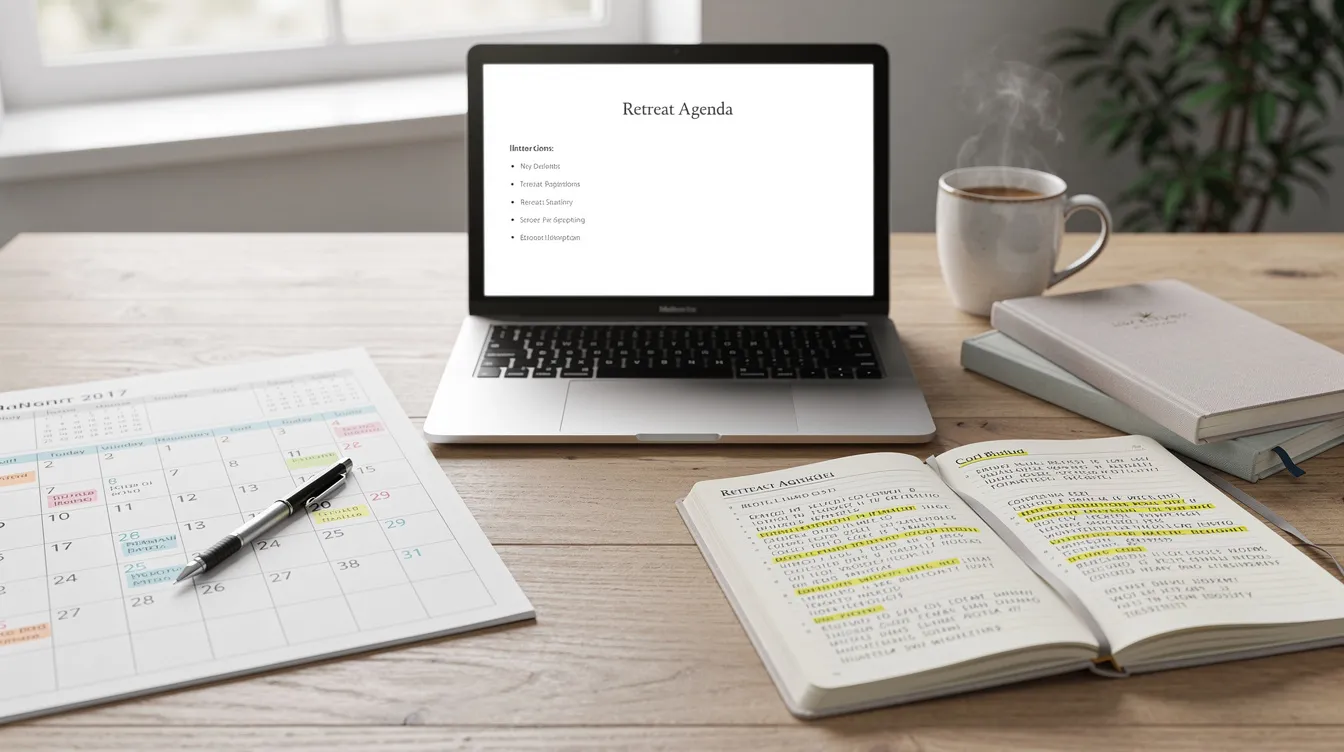
What board members experience during a facilitated retreat
If you are a board member preparing to attend a facilitated retreat, here is what the day will feel like.
Before the retreat, you receive pre-reading, the agenda, and clarity about which decisions will be on the table. That preparation means less time discovering background during the session and more time making choices about the direction of the organization.
During the retreat, quieter members get structured opportunities to contribute through small group breakouts, written input rounds, and facilitated discussion. An experienced facilitator ensures that dominant voices do not absorb all the airspace. Trained facilitators improve board engagement and participation across the full room.
Complex trade-offs become easier to evaluate through tools like priority matrices, scenario thinking, and "must/should/can't" frameworks. You will have time for honest conversation about what is and is not working in governance without it becoming a complaint session.
At the end of the day, you leave with real closure: a summary of what the board decided, who owns each action, and how the team will follow up at the next three board meetings. Hiring a facilitator can lead to better strategic planning outcomes because the session is designed around decisions, not just conversation.
One example: a long-tenured trustee arrived skeptical, having sat through retreats before that produced nothing. By mid-afternoon, she had co-led a small group that ranked the organization's top three strategies. She left with two specific commitments, a 60-day deadline, and a sense that the retreat was worth the money and time invested. The community of board members left more connected, more accountable, and clearer about their individual roles.
Follow up, accountability, and turning retreat decisions into action
Many board retreats fail not during the day itself but in the 90 days after, when no one owns the decisions. Facilitators are responsible for documenting decisions and action items after the retreat, and Masterly builds that accountability into the retreat process from the start.
Masterly's approach to follow up includes:
- Live action log captured during the retreat with owners, due dates, and a definition of what "done" looks like for each commitment.
- Future board meeting checkpoints: agreement on which specific meetings (e.g., October 2026, January 2027) will include progress reviews on retreat decisions.
- Optional support drafting board resolutions or consent agenda items to formalize key governance or policy decisions.
- One-page scorecard for tracking post-retreat commitments, with each strategic initiative listed alongside its status, owner, and milestone.
This approach reduces the "Didn't we already decide this?" conversations that erode board trust and slow progress on strategic priorities. Follow up is not an afterthought; it is designed into the retreat agenda so participants leave knowing exactly how implementation will be monitored.
Masterly also equips the board chair and CEO in a short debrief call after the retreat. The goal is to help them lead upcoming board meetings as follow-up engines rather than information dumps, keeping retreat decisions visible and on track.
FAQs about hiring a board retreat facilitator
How is a board retreat with Masterly Consulting Group different from a strategic planning retreat? A strategic planning retreat focuses on setting multi-year direction. Masterly's board retreat facilitation includes strategic planning but also addresses governance roles, board and staff alignment, and a concrete accountability framework. The session produces decisions that connect to ongoing board meetings, not just a planning document.
What kinds of boards do you facilitate for? Masterly works with associations, nonprofits, universities, and corporate boards. Typical board sizes range from 7 to 25 members. The process adapts to boards facing leadership transitions, hybrid governance structures, or sector-specific challenges in health, education, or social services.
How far in advance should we book a board retreat facilitator? Six to eight weeks is standard for a one-day retreat of moderate complexity. For retreats involving sensitive governance changes or merger decisions, 10–12 weeks of lead time allows for deeper discovery and input.
Can you work with a challenging or divided board? Yes. Facilitators help manage difficult conversations effectively, and pre-retreat interviews identify fault lines before the day begins. An experienced facilitator uses structured tools and ground rules to create space for productive disagreement without letting conflict derail the session.
Do you facilitate virtual or hybrid board retreats? Yes. Hybrid retreats require additional logistics to ensure remote participants can participate fully. Masterly uses breakout rooms, polling tools, and facilitation techniques designed for mixed-modality settings.
How to start planning your next board retreat with Masterly Consulting Group
A board retreat facilitator from Masterly Consulting Group turns limited board time into clarity, decisions, and accountable next steps. Our experienced facilitators ensure full participation from board members and executives, a strategic focus on your most important questions, and clear follow up integrated into ongoing board meetings.
Ready to achieve retreat success? Request a board retreat planning session today. Schedule a 30–45 minute consultation to discuss your board size, retreat dates, and major decisions on the horizon. Masterly Consulting Group will guide you every step of the way.
Contact us at (972) 236-5051 or visit https://www.masterlygroup.com/ to get started.